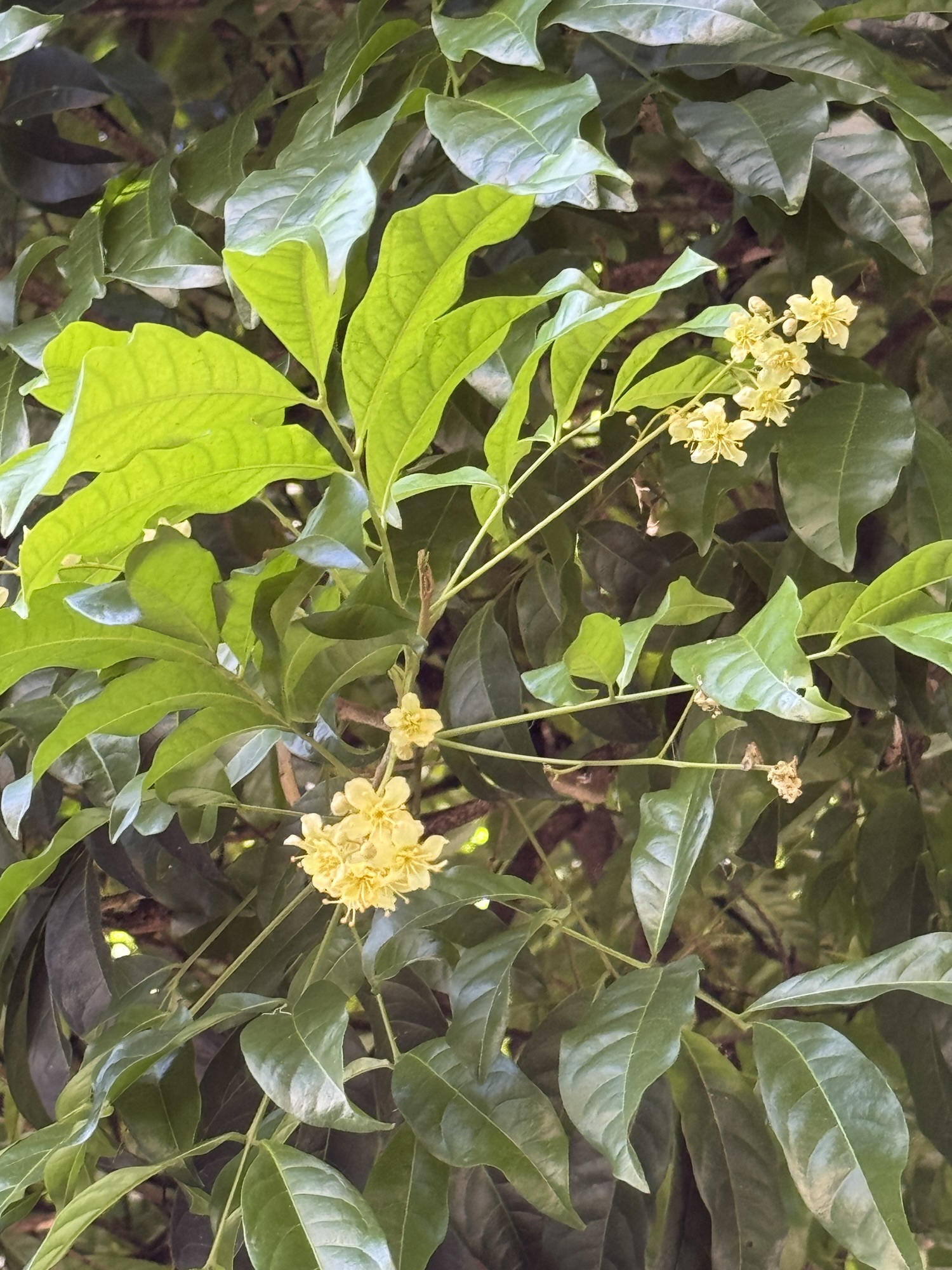
The tulipwood tree, Harpullia pendula, is a native Australian tree that can reach 24 metres tall in the wild, but around six metres in urban areas. Tulipwood is native to the rainforests located between Coen in Queensland and the Bellinger River in north-east New South Wales, which is a beautiful part of Australia. It is a food tree for the larvae Cornelian butterfly, which is reason enough to have the tree around in my opinion. The binomial name Harpulia pendula has the following meanings:
- Harpulia-is from the native name of a related tree in the same genus as this tree in Bengal.
- Pendula-a Latin word that means either hanging or drooping. This refers to the beaches and the way they hang when there is fruit on the branches.
The compound leaves have four to eight leaflets that are elliptic in shape and up to twelve centimetres long. The whole leaf is up to thirty centimetres long. The leaves are quite shiny. Tulipwood is evergreen.

Flowers appear in spring and early summer. They are greenish-yellow to white in colour with five petals. The stamens have pink anthers . Flowers are followed by the fruit, which is a two-lobed capsule. When mature, they are orange-red in colour and split in half to reveal some black seeds. To get the colourful fruit, you need both female and male trees.
Tulipwood trees are sometimes used as street and ornamental trees, especially in coastal areas. It is a tough tree that thrives in areas with salt-laden winds and areas where the air is bit polluted. As well as being a street tree, the timber is used in wood turning and cabinets.

Would I have the tulipwood in my garden? I’d probably say yes because it is a very pretty tree.
https://brisbanetrees.com.au/tulipwood
https://www.jcu.edu.au/discover-nature-at-jcu/plants/plants-on-townsville-campus2/harpullia-pendula
https://plantnet.rbgsyd.nsw.gov.au/cgi-bin/NSWfl.pl?page=nswfl&lvl=sp&name=harpullia~pendula