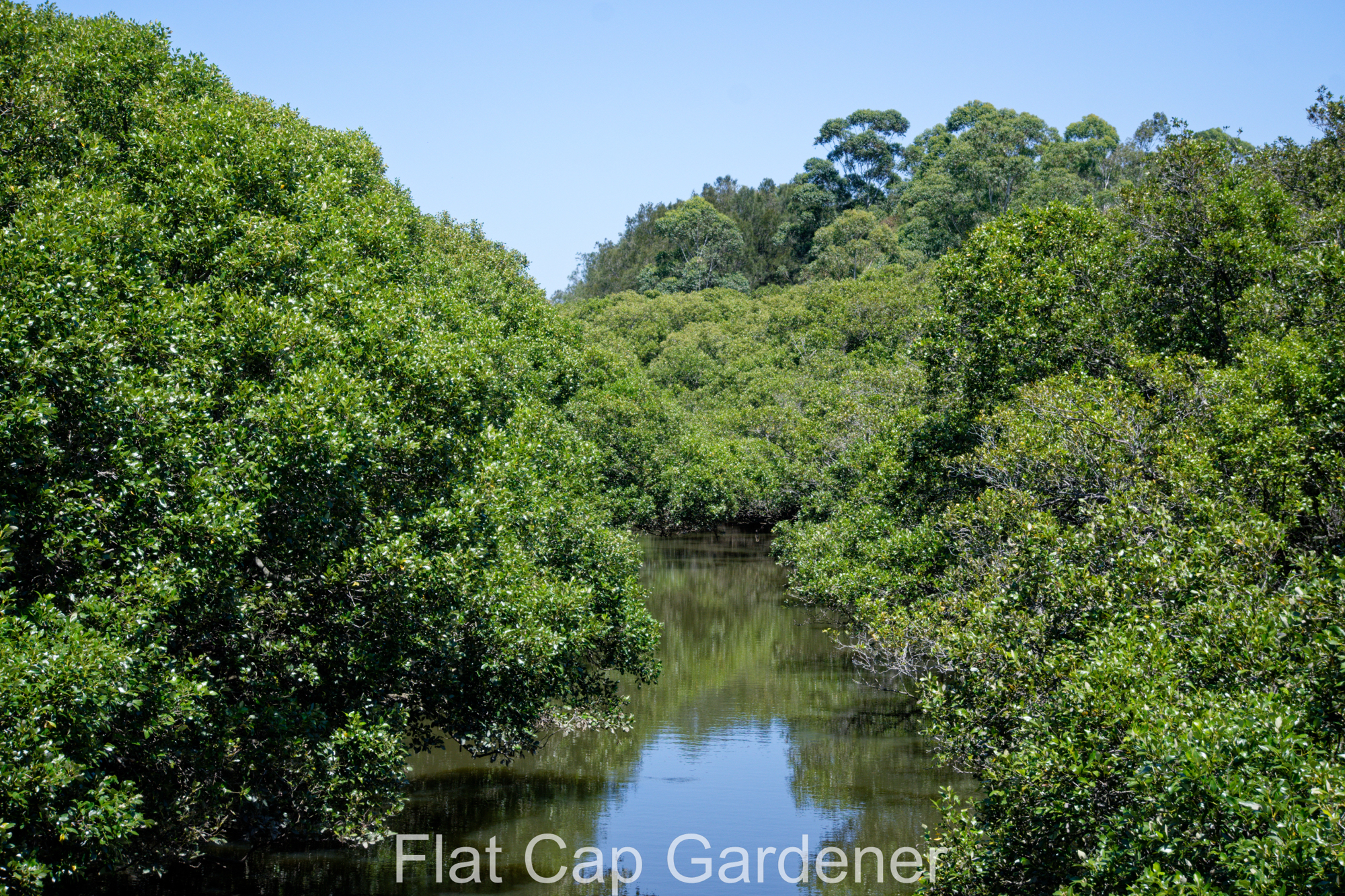
Badu mangroves are located on the banks of the Parramatta River, close to Sydney’s Olympic Park. What caught my interest for a visit to this area initially was the fact that there are a few shipwrecks in the area and I wanted to have a good look around. I enjoyed looking at the mangroves as well as the ships.
What are the Badu Mangroves?
The Badu mangroves are part an area of riverside wetlands that also includes an area coastal salt marsh. The mangroves are the largest area of mangrove forest that still exists along the length of the Parramatta River. The main mangrove species within this ecosystem is the grey mangrove, Avicennia marina var. australasica, (you can read about this species Here). The area is 65 hectares in size. On the landward side of the mangroves, there is Casuarina swamp forest (with the main tree species, the swamp she-oak, being written about Here) that is between five and ten metres above sea level (rather than the 0-2m above sea level of the mangroves themselves).

At one time, mangroves similar to these would have lined the banks of the river, with a lot being removed or altered by land use change for industrial and residential uses over the past two hundred rears or so.
The history of the Badu mangroves
The original inhabitants of the are were the Wan-gal clan of the Eora nation. The mangroves were used for food and fibre, with evidence (including fire and shell middens) suggesting that Wan-gal clan used the area for around 20,000 years.
After Europeans arrived, the area surrounding the Badu mangroves eventually got used by industry for factories and eventually housing, as well as the wider Olympic park area and some adjacent parkland.
What plant species are present in the mangroves?

As well as the grey mangrove and swamp she-oak, there are several other species in the area, including:
- Ficus rubiginosa-Port Jackson Fig
- Melaleuca linariifolia-narrow-leaved paperbark
- Suaeda australis-austral seablite
- Carpobrotus glaucescens-pigface
- Hemarthria uncinata-mat grass
- Phragmites australis-common reed
There are more species present too, but I think it would be rather boring to just write lists!
I didn’t see all of these plant species when I went for a visit to these mangroves, but I’m sure that Ill be back in the near future for another visit so I’ll keep my eyes out for more.
Why are mangroves important?
In the not too distant past, mangroves were seen as irrelevant and not worth keeping as intact ecosystems. Since the 1990’s, research has started to show why mangroves are important, which includes the following reasons:
- Home to many types of fauna, as well as flora, including birds, crabs, many insects and bacteria
- The mangroves act as a buffer against storm surges and help prevent erosion as their roots hold soil together
- Mangroves also help clean water, by trapping sediments within water with their roots
- I am also of the view that keeping mangroves intact for their own sake is as important as for any perceived human benefit like an economic benefit


What are the threats to the Badu mangroves?
There are several threats to these mangroves. A lot of these are due to humans and include the potential for chemical spills/runoff from the surrounding major roads, rising sea levels due to climate change and land clearing for more urban development.
What else is in the area?
There is the coastal salt marsh ecosystem on the seaward side of the mangroves. This area is great because it acts as a bird sanctuary for many different wild birds. For those keen on birdwatching, there are special bird hides surrounding this area to watch these birds at your leisure.


There are also some shipwrecks in the area-HMAS Karangi, SS Ayrfield and a boat with no name. All of these wrecks have mangroves growing out of them, which is something I find quite satisfying somehow.


What I enjoyed about my visit
I always enjoy getting out exploring new environments and places, and just visiting here for the first time was fun. The mangroves were interesting as I have never spent any time in this type of environment before.

I also enjoyed looking out over the salt marsh and watching the birds for a while-nature has a certain way of letting me relax after a busy week at work, especially when wildlife is around!

The ship wrecks were also interesting to see. In their faded glory as ships, they have found a new way of being as nature takes back over.

If you ever find yourself at a loose end in Sydney, the Badu mangroves are worthy of a visit.