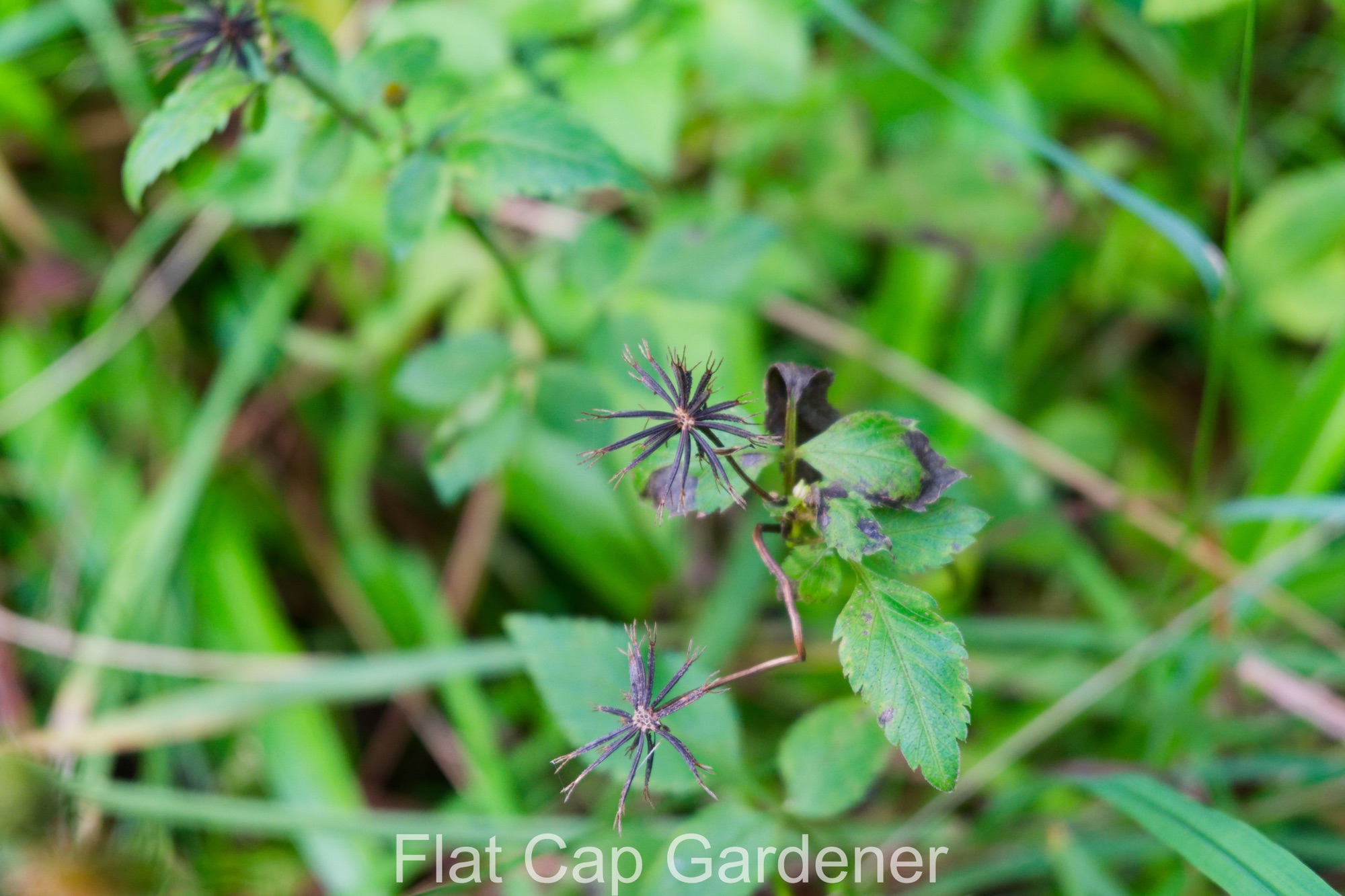
Cobblers pegs is a plant that has become a weedy problem here in Australia. It is a cosmopolitan weed of areas under some form of cultivation, like gardens, pastures, roadsides, disturbed areas and wasteland. As well as this, it can often be found along forest margins and open woodland. It is more usually found in warmer, coastal areas. Cobblers pegs is a plant native to tropical areas of America. In both New South Wales and Queensland, this plant is considered an environmental weed (a plant that has invaded and/or impacted upon native ecosystems). As always, here is the binomial name meaning:
- Bidens-comes from two Latin words, ‘bi’ meaning two and ‘dens’ meaning teeth.
- Pilosa-another word of Latin origin that means ‘hairy’

In height, cobblers pegs can grow to over a metre in height and has a spread of half that when large. The leaves have a toothed margin, with three to five individual leaflets to each leaf. They can reach up to twelve centimetres long and eight centimetres wide.

The flowers have yellow tubular florets in the centre with white ray florets around the outside. They appear in an inflorescence at the end of the stems. Individual flowers reach up to eight millimetres across. Mostly summer and autumn flowering.

Flowers are followed by black, long, flat seeds. Each seed has up to four awns at one end. These give the seed the ability to attach easily to clothing, aiding its spread further afield. The seeds can also be spread through waterways, vehicles or contaminated agricultural produce. Many seeds are produced by each plant and they are able to survive for a while within the soil.

Why is cobblers pegs a troublesome weed? It can out-compete other plants in the area in which it is growing as this species grows quickly. It can also grow taller than many plants, whether in native bushland areas or in gardens. Wherever this plant grows it competes for water, light and nutrients with native/garden/crop plants that you want, reducing their vigour. Cobblers pegs can look like a carpet of green if you don’t do anything about the initial infestation.
What are the best ways to remove this plant? Prevention is always better than a cure with any weed, including this one. To prevent a large infestation, remove any cobblers peg plant that you find as soon as you see it, especially if it is flowering. If you have a lot of plants, it’s still best to pull them out as soon as possible, even if it takes a while. Little and often is better than none at all. If they plants are small, a garden hoe can be used to deal with the problem quicker. Some people may use herbicides to remove kill the weeds but I never do-herbicides never deal with initial problem, they just act as a band aid.
After removing cobblers pegs from your garden, plant some new plants in that area. This will help to increase competition to help prevent seeds germinating. Any that do germinate, remove straight away.
Cobblers pegs is a weed that can be an issue in the landscape. It is best dealt with as soon as possible to prevent further spread.
https://plantnet.rbgsyd.nsw.gov.au/cgi-bin/NSWfl.pl?page=nswfl&lvl=sp&name=Bidens~pilosa
https://sown.com.au/bidens-pilosa-asteraceae-cobblers-pegs/
https://nuturf.com.au/article/post/cobblers-pegs
https://weeds.brisbane.qld.gov.au/weeds/cobblers-pegs