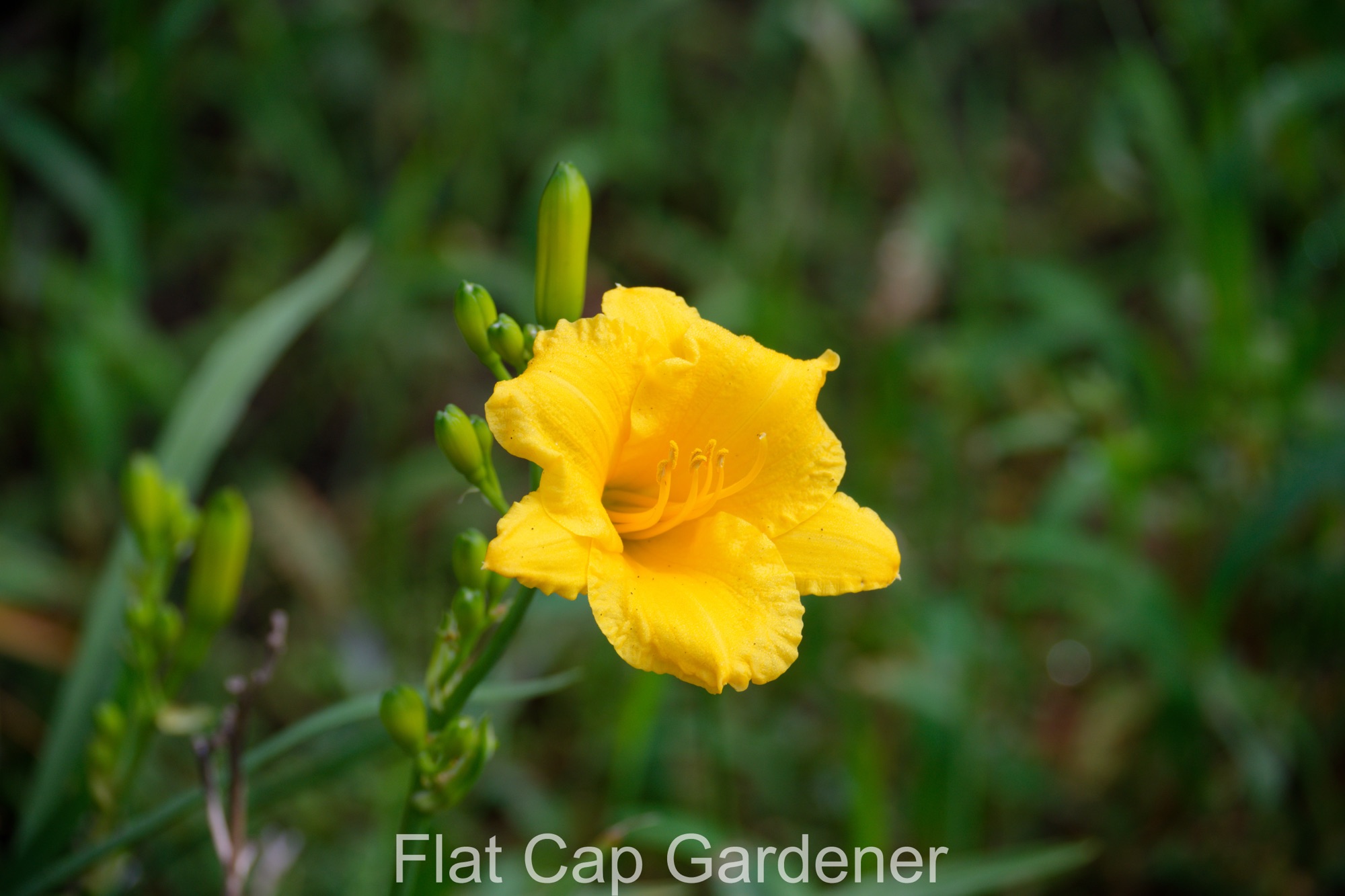
The lemon day lily, or Hemerocallis lilioasphodelus, is a rhizomatous perennial that can reach 80 cm tall. It’s a native of Asia and in parts of Europe, including north-east Italy and Slovenia. It was apparently the first day lily to be used in plant breeding. The binomial name has the following meaning:
- Hemerocallis-comes from two Greek words, ‘hemmer’ meaning day and ‘kallos’ meaning beauty. They refer to the flowers that only last a day.
- Lilioasphodelus-again comes from two words, ‘cilium’, the Latin word for lily and ‘aspodelus’, a Greek name for the asphodel plant that has a similar plant structure. The asphodel plant was associated with the underworld, death and mourning in Greek mythology.
Leaves ion the lemon day lily are long and narrow, reaching between 50-65 centimetres in length.

Flowers are lemon-yellow and reach up to nine centimetres across. They are star-shaped and attract butterflies.
From what I have read, the lemon day lily is easy to grow in any soil, provided it is free-draining and moist. It’s best in full sun and part-shade. The lemon day lily is able to tolerate poor soil, heat and humidity, often ideal for Sydney conditions. It also a good plant for urban conditions and in areas where there is erosion.

To keep the lemon day lily looking good, dead-head when required and ensure it has plenty of water. When overcrowded, divide it and replant the plants around the garden. They look good mass planted over a large area or in clumps dotted around-this makes them stand out. Pests and diseases are few, although aphids, mites, day lily rust and thrips could appear.
Now to the age old question of whether to include them in my magical and extendable garden. I think I would have them in there as they are a very cheerful colour.
https://www.gardenia.net/plant/hemerocallis-lilioasphodelus-lemon-lily
https://www.rhs.org.uk/plants/39183/hemerocallis-lilioasphodelus/details
https://www.missouribotanicalgarden.org/plantfinder/plantfinderdetails.aspx?taxonid=281955