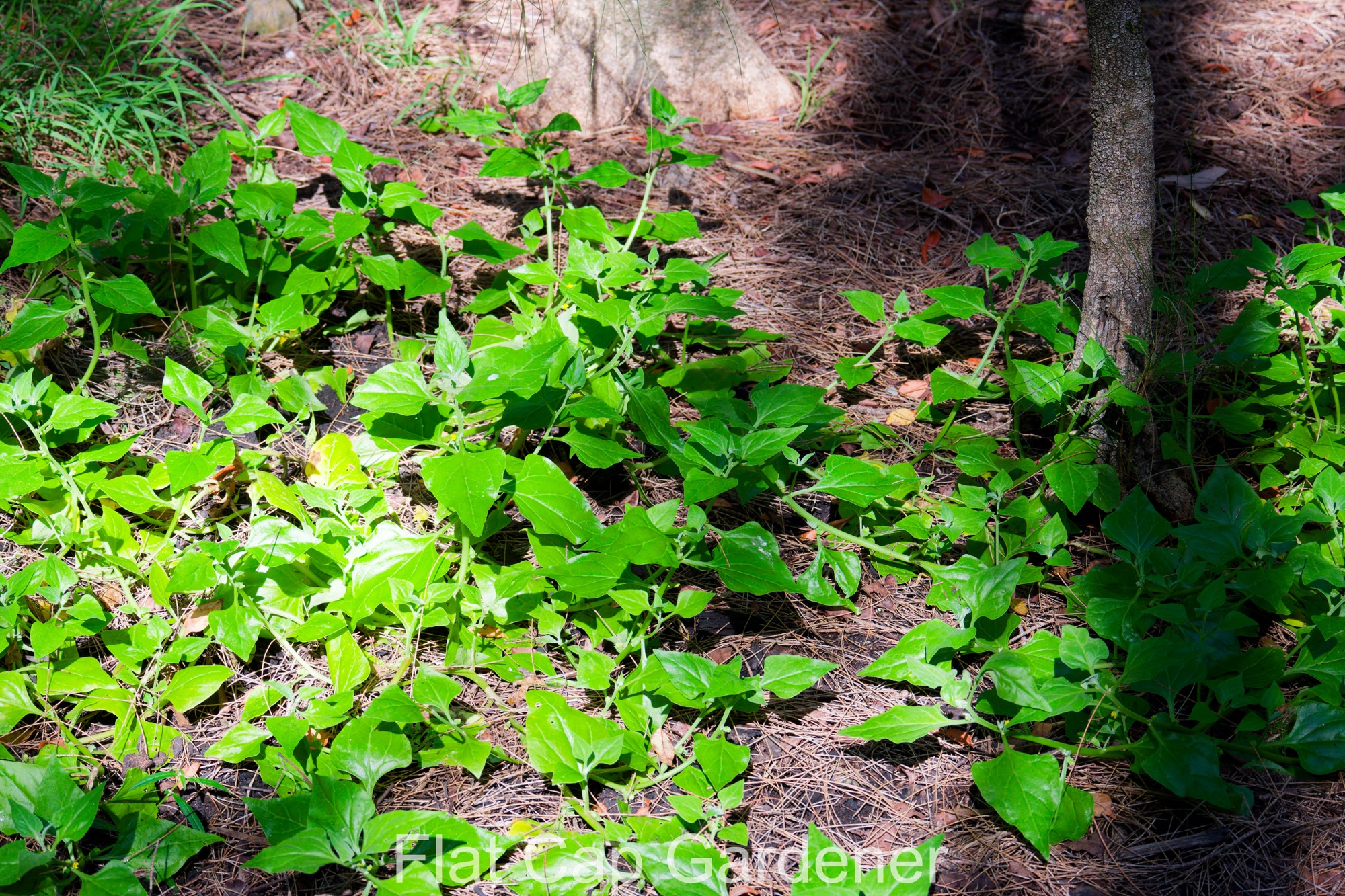
Warrigal greens, or Tetragonal tetragonioides, (also called New Zealand spinach) is a sprawling ground cover that can reach up to two metres in spread. It’s a common plant in coastal areas of a lot of Australia, including New South Wales, Queensland, Victoria, Tasmania, South Australia and Western Australia. It does sometimes appear in more inland ares with sandy soils. Warrigal greens are also known to be native to New Zealand, Chile, Japan and Argentina.

The name ‘warrigal’ is an Aboriginal name coming from the Dharug language for ‘wild’. The Dharug peoples are from the Sydney area. The ‘spinach’ name comes from the fact that it was used like spinach by early European settlers (boil it for 3-4 minutes to remove oxalic acid before eating). The meaning of the binomial name is as follows:
- Tetragonia-the Greek word for ‘four-cournered’
- Tetragonioides-means ‘tetragonia-like
The favoured habitat of warrigal greens is along the edges of salt marshes and damp areas. I have seen it growing along river banks and on the inland edge of mangroves. The soil is moist. It grows happily in both full sun and semi-shade.
The leaves have a rhombic shape, reaching up to eight centimetres by five centimetres in size. They are thick and quite fleshy. As with the whole plant, the leaves are covered blister-like vesicles.

The flowers are appear over most of the year. They are yellow, small and appear from the leaf axils. They are often solitary, but a few can appear together. The flowers are followed by woody, winged fruits that contain numerous seeds.

Warrigal greens aren’t used as garden plants. They are one of those plants that you see in the bush when out walking. It appears a little ‘untidy’, but the bush is ‘untidy’ so it fits in perfectly.
https://tuckerbush.com.au/warrigal-greens-tetragonia-tetragonioides/