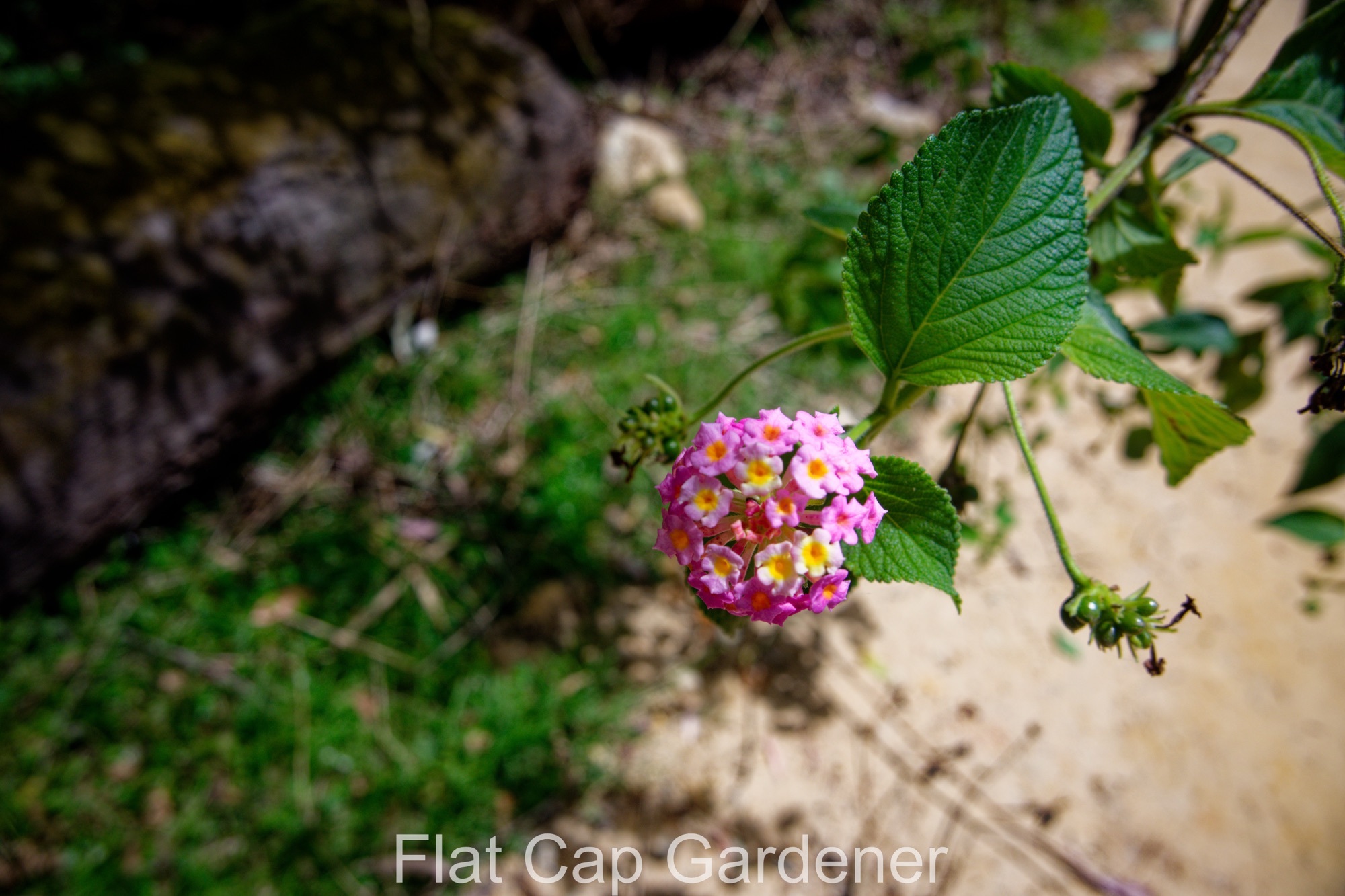
The second part of my discussion on lantana. Here I talk about why lantana is such a successful weed and how it can be dealt with.
The first thing that lantana does is grow well on empty land, which is why it is often found growing on roadsides and in disturbed areas along rainforest margins.
While seed germination most frequently occurs in summer after a decent amount of rain, lantana seeds can germinate at any time of year provided the soil contains enough moisture and the soil is warm enough. Flowering occurs the for the first time the following year. Flowering usually occurs when there is plenty of moisture in the soil with warm and humid air-this means that along the coasts of NSW and Queensland, there is constant flowers and fruit, thus a ready supply of seeds. A plant that produces plenty of seeds has a greater chance of spreading further given the right conditions.
There is also the ability of lantana to layer itself. Layering is where a section of stem touches the ground and grows roots into the soil. This allows the plant to spread further.
As lantana naturally forms dense thickets, it takes over bushland areas. When it grows like this, it smothers seedlings of native plant species in the bushland area in question. Over time, it becomes the dominant plant in the understory and then the canopy-something that isn’t ideal at all! Because of this ability to grow this way, it is a threat to biodiversity. This is especially true in World Heritage-listed areas that include the Wet Tropics of northern Queensland, Fraser Island and the Greater Blue Mountains.
In agriculture, lantana is a threat to stock animals as it it toxic to them. Apparently, the red-flowered version is the most problematic in this regard. In terms of forestry and pastures, lantana competes for resources with the crop plants in question.
In urban areas, lantana can invade gardens. Lantana is also poisonous to humans, with all parts of the plant having this effect. If eaten, symptoms are as follows:
In urban areas, lantana can invade gardens. Lantana is also poisonous to humans, with all parts of the plant having this effect. If eaten, symptoms are as follows:
In urban areas, lantana can invade gardens. Lantana is also poisonous to humans, with all parts of the plant having this effect. If eaten, symptoms are as follows:
- Vomiting
- Diarrhoea
- Weak muscles
- Breathing problems
- Eye and/or skin irritation
Another problem with lantana is that it is rather flammable. In a country like Australia, where fires are a natural part of the ecosystem, lantana is a huge issue. This is because adding to the fuel load of a fire allows that fire to burn more fiercely and hotter (and probably spread quicker where there is a lot of it) than would naturally occur.
How to deal with lantana and reduce the amount of lantana
In an ideal world, it would be great to remove lantana from the country. That may well be impossible considering the scale of the issue. But, that is not an excuse to do nothing! I am of the view that even a little is better than nothing.
For the relevant authorities, preventing the further spread of lantana is important. Beyond that, there are several methods of clearing lantana.
Herbicides can be used to help, how they are used depends on the exact situation being worked in. The herbicide to used needs to be checked with the relevant organisation in you country. In Australia, this is the Australian Pesticides and Veterinary Medicines Authority. For me this would be a last resort method to use, but you also have to use every tool available sometimes.
Physical methods of removal include mattock, leavers and spades or shovels-anything that makes it easier to remove. this can be useful in areas where machinery cannot get to the area, or to protect the native vegetation of the area. Machinery can be used for large infestations.
Competition from other plants is a way to reduce lantana plant numbers and size. Grasses and legumes are apparently effective, along with allowing cattle in to feed on these plants. Follow with revegetation using native plants.
Biological controls have been tried, but these insects don’t usually kill off lantana populations completely, which defeats the object of the exercise to me-eradication should be the ultimate goal.
Whatever methods are used in any area to remove lantana from the landscape, consistent work over a long period of time is required. Repeat visits are required to remove any new growth of lantana, whether seedlings or from plants missed previously. If large areas have removed, then revegetation needs to be done and this cared for until established. It is time-consuming work that takes a long time, but if consistently and thoroughly done, it can be successfully completed.