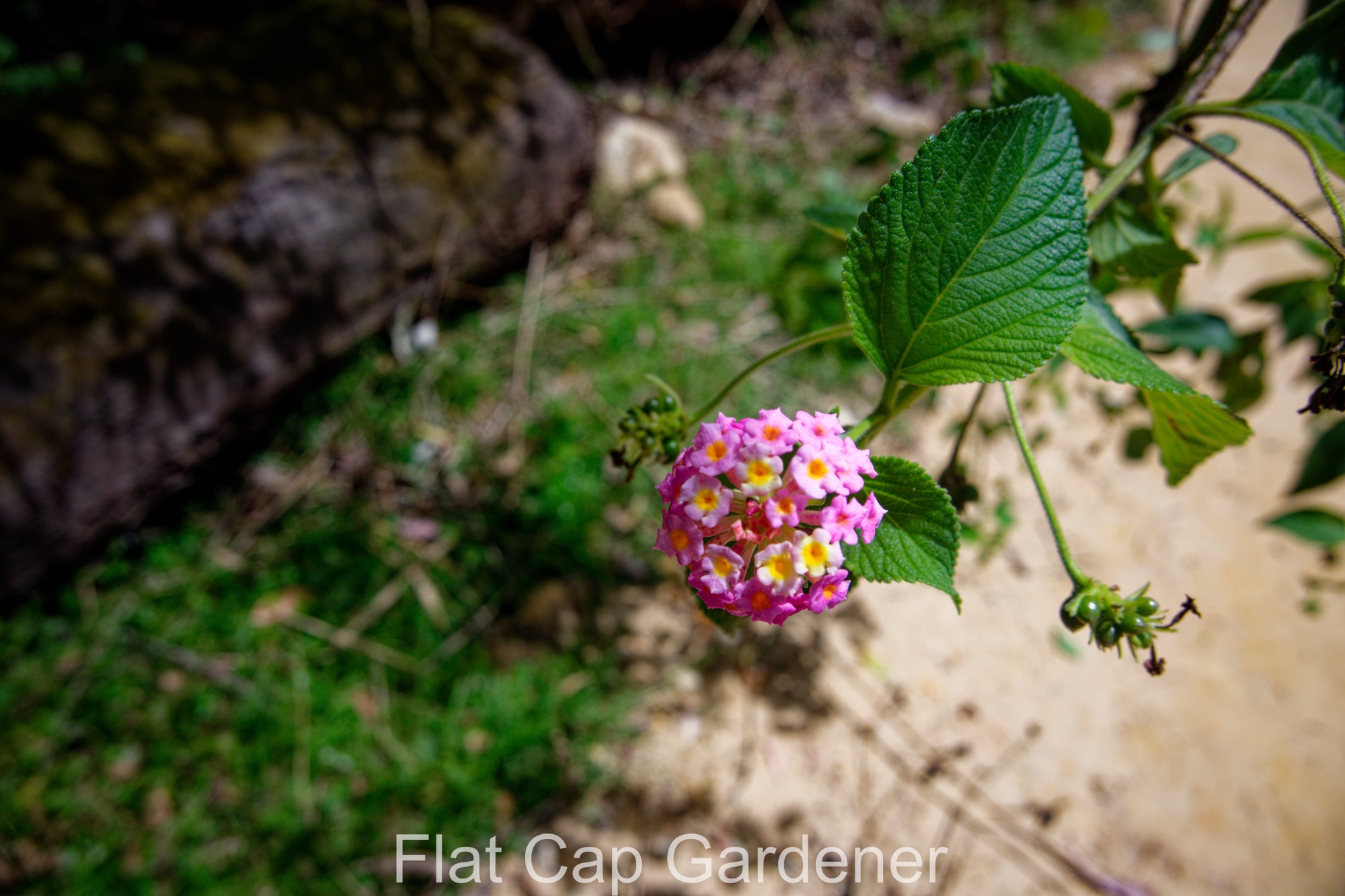
Lantana camara is a native of South America that originally came to Australia in around 1841 as an ornamental garden plant. Since then, lantana has spread out of gardens into agricultural lands and native forests/bushland areas. Today, it is one of a group of plants that come under the term of ‘weeds of national significance’. These plants are the worst and most damaging weeds in the country, based on factors like invasiveness, spread potential and impacts on the environment, economy and society.

What is lantana?
This native of South America is able to reach up to four metres tall, potentially six metres in favourable conditions. It has the ability to scramble into trees. Roots are shallow and stems often have prickles on them.
The leaves are arranged in pairs opposite each other on the stem, with each pair arranged at ninety degrees compared to the pairs on either side. Thy are up to 100mm long by 60mm wide and oblong in shape. They are covered in hairs on their upper surface due to glands near the hairs.

The inflorescences are composed of between twenty and forty flowers. Flowers can be various shades of pink, white, red orange and yellow with various colours often on the same inflorescence, with the colours sometimes changing as it matures.

The fruit (officially a drupe) follows the flowers. Once ripe, they are black in colour and contain one or two seeds. Viable seeds are produced from approximately half the flowers-around twenty seeds on a flower head like the one above. Over the course of a year, a mature plant h is able to produce up to a staggering 12000 seeds. These seeds are spread by animals like birds and foxes. Seeds are viable in the soil for many years. All of this shows why lantana is such a problematic weed here in Australia.
Within this species, there is a lot of variation within it across its natural range within tropical South America. This is termed either an ‘aggregate species’ or a ‘species complex’. There are also many varieties bred by the horticultural industry for different flower colours and growth habits.
Naturally, lantana grows in areas of high rainfall with tropical, sub-tropical and warm temperate climates. Salty, waterlogged or dry soils are not tolerated and neither are temperatures under five degrees celsius. Soil that lantana does like is rich soils with plenty of organic matter as well as clay and basalt derived soils.
What situations does lantana grow in here in Australia?
Lantana grows in disturbed areas like along forest edges. Areas of rainforest that have been disturbed (for whatever reason this has occurred) often has lantana growing within it. Open eucalypt forest and river margins also gets invaded by lantana.
In agricultural settings, lantana is often found growing along fence lines and pastures (including those pastures that are unimproved) or where the soil is exposed and bare.
Across Australia, there are over four million hectares of lantana growing east of the Great Dividing Range, from Mount Dromedary in southern NSW to Cape Melville in northern Queensland. There are isolated infestations in the Northern Territory, Western Australia and Lord Howe and Norfolk Islands.
As there is so much information on the damage caused by lantana in Australia and the way to deal with the massive problem, I am going to write another post with this information in it.