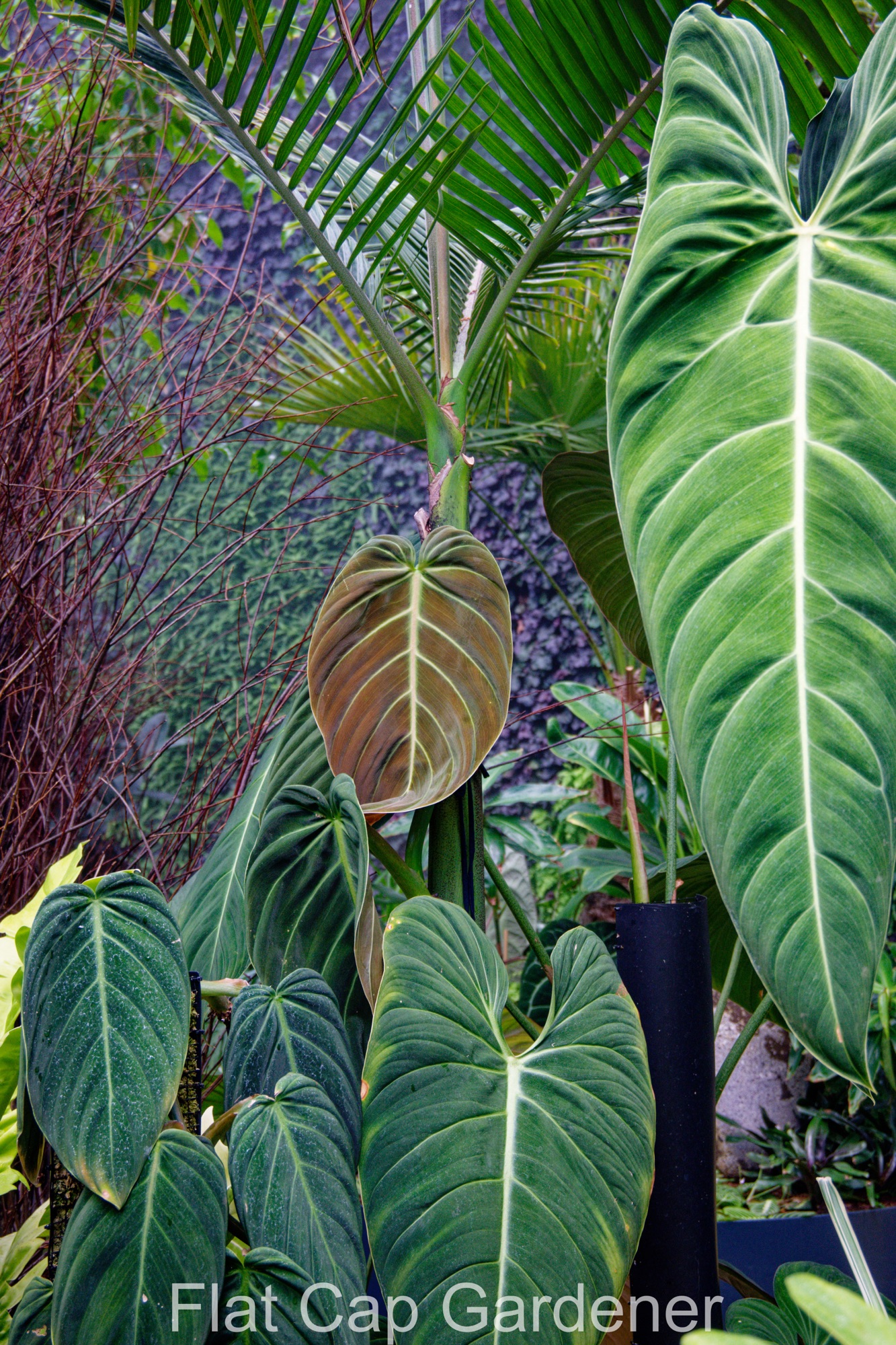
Philodendron melanochrysum, commonly known as black-gold philodendron is a plant that I found at Sydney’s botanic gardens in their display area called the Calyx. This rather attractive but slow-growing climber is endemic to Colombia, in the wet foothills of the Andes where it grows at around 500 metres above sea level. The black gold philodendron is a member of the Areceae, or aroid, family. The binomial name has the following meanings:
- Philodendron-comes from two Greek words, philos meaning ‘love’ and dendron meaning ‘tree’. This is an appropriate name for this genus as the plants do like climbing up trees in their native habitats.
- Melanochrysum-also comes from two Greek words, melano meaning ‘black’ and chrysum meaning ‘gold’. This comes from the colour of the leaves-if they are in sunlight, they have tiny black sparkles. This is also where the common name of ‘black-gold philodendron’ comes from.

As you can see from the photo above, the leaves are rather impressive. They are narrowly ovate to oblong in shape and can reach a metre in length. They have a velvety appearance. Their colour is described as ‘blackish-green’, but it must depend on the light as I just see them as a deep green colour. Their veins are pale green in colour. Their new, juvenile leaves unfurl to reveal a lovely copper-gold colour.

The black-gold philodendron produces spathes that are green and white in colour and are up to twenty centimetres in length. Unfortunately, I don’t have any photos of their spathes.
In its native habitat, the black-gold philodendron grows as an understory plant in forest, where they like indirect, dappled light.

Cultivation of this philodendron has been occurring outside South America since at least 1886, which doesn’t surprise me as I think it’s a great looking plant. To grow this plant successfully at home, the black-gold philodendron is happy in a moist well-drained loam potting mix, with plenty of organic matter. It needs a humid growing environment-in the Calyx, they had misters going every few minutes to increase the humidity of the air, as this plant (and the others growing in the display) need this humidity to be happy. While you don’t need misters at home, regular watering is required to keep the black-gold philodendron happy. Allow the plant to grow up a moss pole, as this will allow the plant to grow in its natural habit.

Propagation is easily done through using softwood cuttings or by leaf bud cuttings.
Pests can include scale insects and glasshouse red spiders mite.
I actually really like this plant, to the point where I am considering getting one to grow at home indoors. I think the leaves are great-they are a great shape, size and also colour.
A word of caution is needed as this plant is toxic to humans, as well as cats and dogs. Please ensure that any of your pets, or kids, don’t eat this plant!
All photos are my own
https://colombia.wcs.org/en-us/wild-places/andean-amazon-piedmont.aspx
https://www.rhs.org.uk/plants/47836/philodendron-melanochrysum/details
https://www.aroidsaustralia.com.au/products/melanochrysum-new