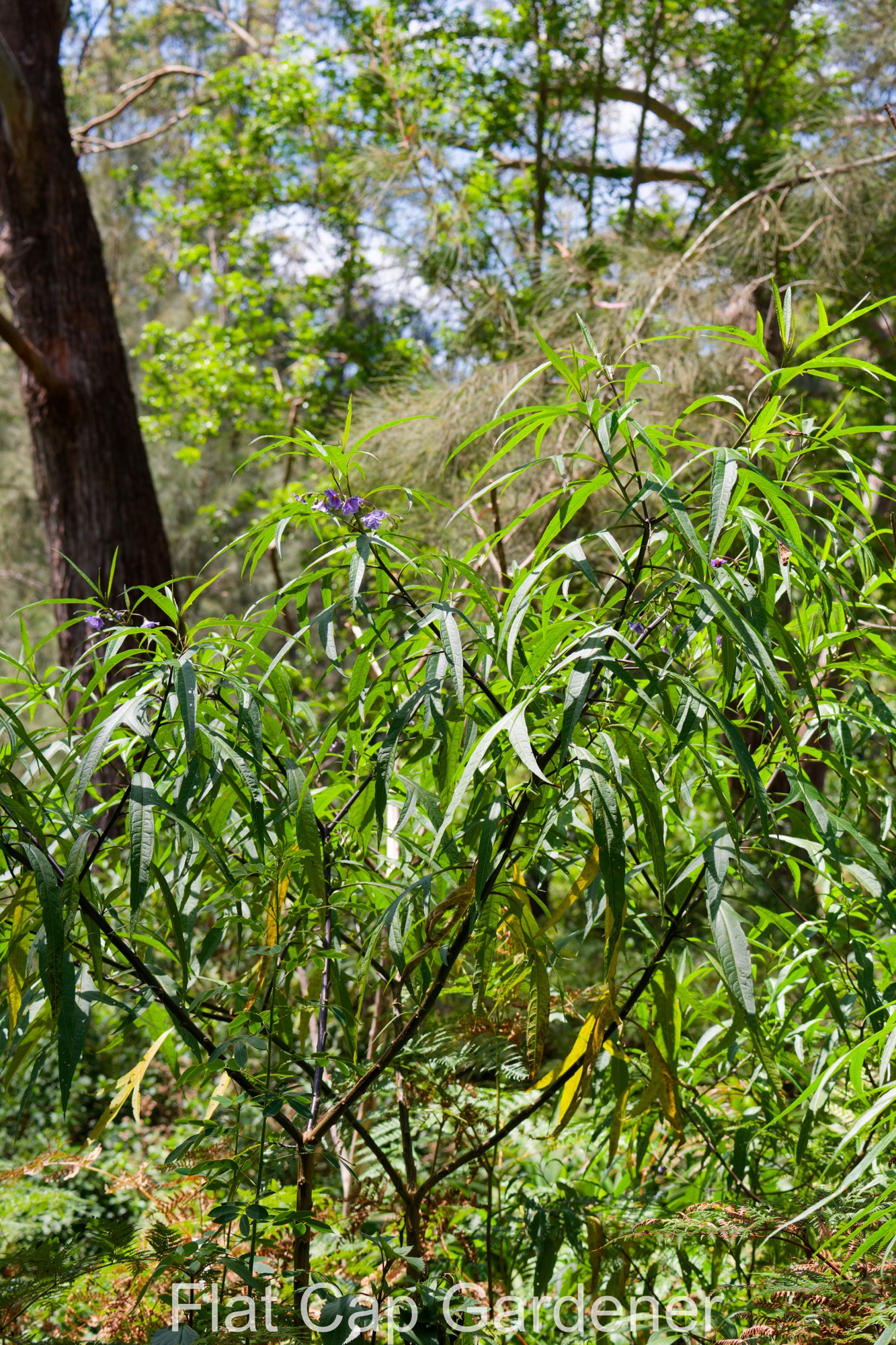
Kangaroo apple, or Solanum aviculare, is an Australian native plant that is related to plants like potatoes, tomatoes and black nightshade. This rather nice erect shrub can reach up to four metres tall and three metres wide. The kangaroo apple is endemic to the Australian states of New South Wales, Queensland, Victoria and South Australia, along with New Zealand and the Pacific Islands. The common name of ‘kangaroo apple’ came from the fact that the leaves look like the hind feet of kangaroos. The binomial name, Solanum aviculare, has the following meanings:
- Solanum–I have read a few different things on this. The first is that solanum is the name used by Pliny for Solanum nigrum, or black nightshade. Another is that the word may reference the Latin word ‘sol’, which means sun. Finally, it could be from the word ‘solanem’ which means ‘to comfort or soothe’ in reference to the medicinal properties of plants in their genus.
- Aviculare-a Latin word for ‘little bird’ which refers to wing-like leaves.

The leaves of kangaroo apple are variable in that they can be deeply lobed (looking like the said kangaroos feet), with between two and six lobes or entire (no lobes at all). They can reach a size of up to 20 cm long.

The flowers of the kangaroo apple are a delightful purple colour, with yellow anthers. Flowering occurs in November and December, which is late spring and early summer here in Sydney.

Fruits follow the flowers are ovoid in shape. They start out green-yellow and turn red once mature.

The habitat of kangaroo apple is coastal rainforests and wet schlerophyll forest. It is a rather useful plant in that it is found in areas that are regenerating into forest, including areas of wasteland next to these forested areas. Kangaroo apple is a shelter plant for other plants too, where it shelters young seedlings of other species until they are well established. Flowers are visited by insects, including native bees, and birds.
Kangaroo apple contains solasodine, a steroid used in manufacturing oral contraceptives today. Aboriginal people also used this plant for contraceptives. Today, this plant is grown in both Russia and Hungry for this purpose.
I do like kangaroo apple a lot. I don’t see it in gardens here in Sydney, but there is no reason why it couldn’t be (although seed should never be taken from bushland areas where this plant is found). All my photos were taken in Lane Cove National Park, which is around 5-10 minutes away from home.