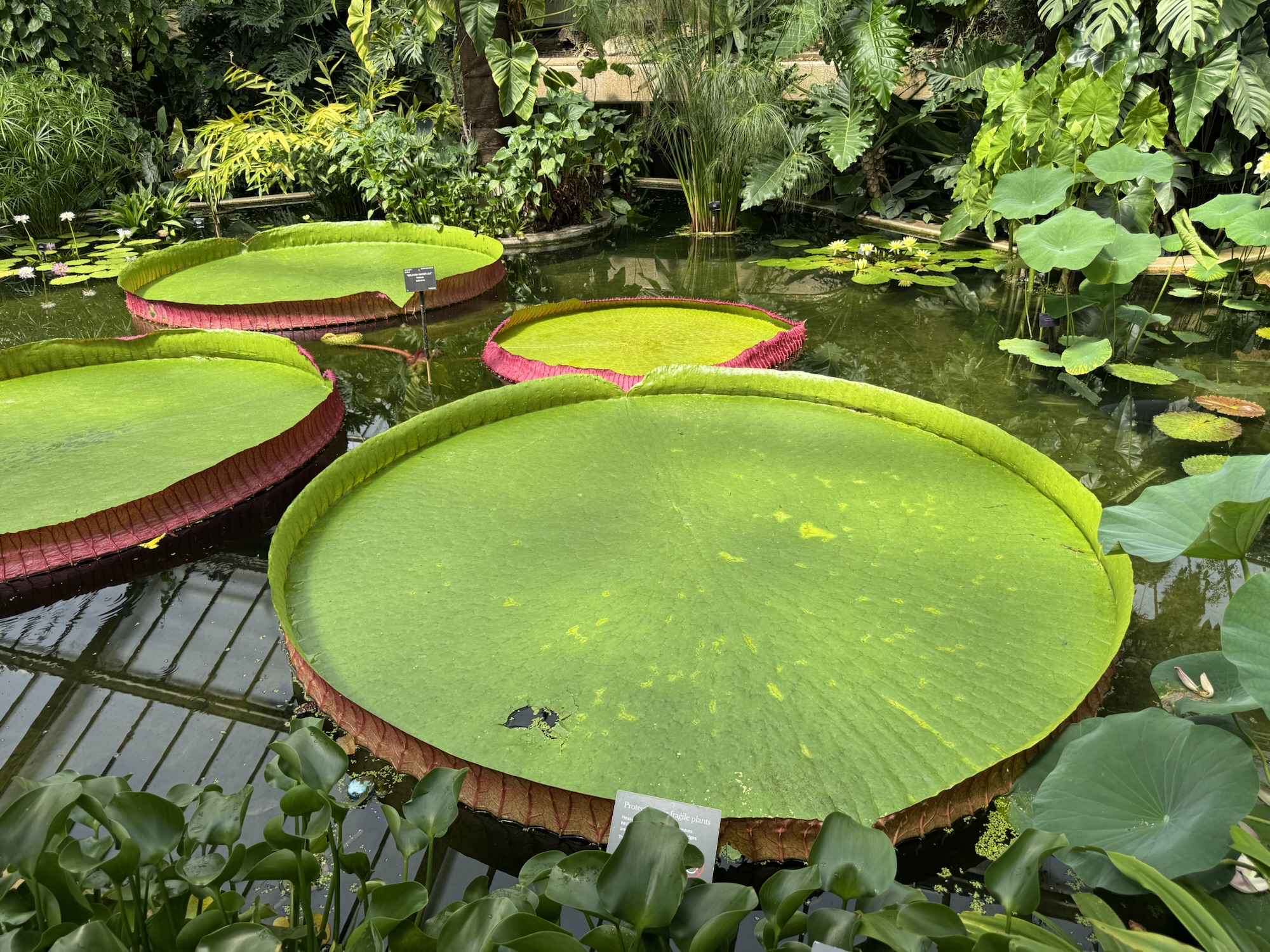
The Bolivian waterlily, or Victoria boliviana, is a relatively newly discovered species of waterlily, even though it has been in plain sight for 177 years within the herbarium at Kew Gardens-scientists didn’t realise that it was a different species until they did genetic studies on seeds donated from Bolivia in 2026. Within the genus Victoria, there are three species that includes Victoria amazonica, Victoria cruziana as well as Victoria boliviana.

As the largest waterlily in the world, the Bolivian waterlily has leaves reaching three metres across when growing in the wild, something that I think is a rather awesome thing! The family it belongs to is Nymphaeaceae. As the name suggests, this waterlily is a native plant to Bolivia in South America, specifically the Llanos de Moxos wetlands in the Beni Province (the wetlands are some of the largest in the world, I have read). Pollinators of this species of waterlily are beetles belonging to the genus Cyclocephyla. The meaning of the binomial name Victoria boliviana is as follows:
- Victoria-named in honour of Queen Victoria in 1852
- Boliviana-named for its native country and in honour of the Bolivian partners on the team who discovered that this was a seperate species.
The massive leaves are green on the upper surface, while the undersides can be green, maroon or blue that float on the waters surface. There are sharp prickles on the rim of the leaf. The underside of the leaf has structural support with what look like veins, which is a rather interesting feature if seen.

The flowers are also interesting. They form underwater, only appearing above the surface when they are ready to bloom. Each individual flower opens on two consecutive nights (and closes during the day). They change in colour, from white to pink, and the form of the flower also changes between both of their nocturnal openings. The prickly flowers are 36cm across. They are followed by 300 seeds that are 13mm wide and 17mm across.
I do rather like reading random facts about plants that take my interest and this is one I like. The Bolivian waterlily is genetically different to the other two species within the genus Victoria. It is more closely related to Victoria cruziana, although they are thought to have diverged into different species approximately one million years ago. I find this fascinating, just because many species of plants and animals don’t exist for that sort of timescale!
- https://www.abc.net.au/news/2022-07–05/waterlily-species-victoria-boliviana-discovered-at-kew-gardens/110208926
- https://www.scinews/biology/victoria-boliviana-10968.html
- https://www.inaturalist.org/taxa/1462346-victoria-boliviana