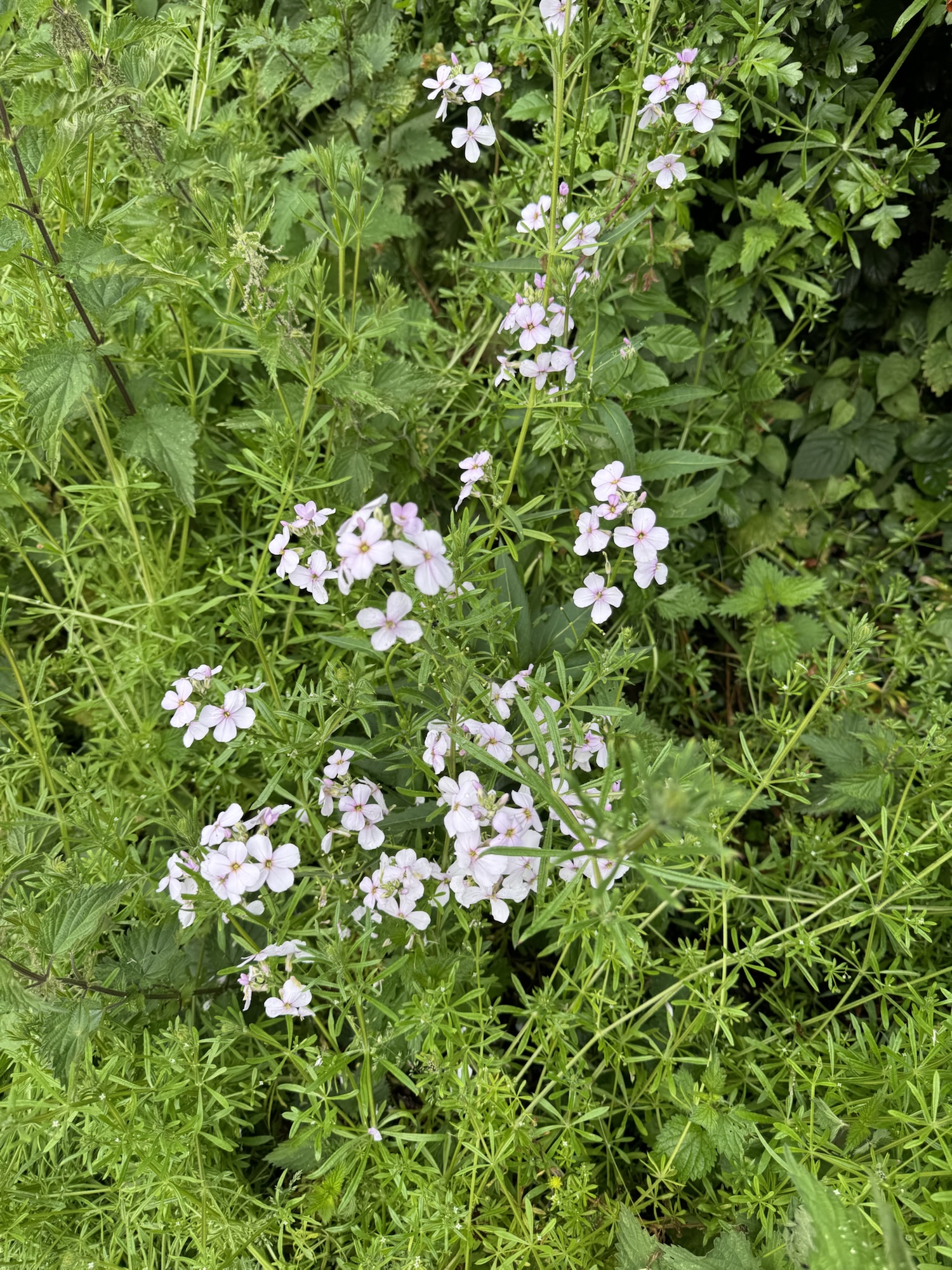
Stickleback is a plant that almost defined my childhood in some ways, mainly because my siblings, friends and I had such fun with it (as well as winding each other up too). Due to the hairs covering the plant, it sticks to anything-human clothes included.

Stickleback is a fast-growing, sprawling plant whose stems are up to a metre long. Along the stems are slender leaves that are arranged in whorls.

The flowers are tiny and white with four petals. They are arranged in clusters. The fruit that follows are small, round and green or purple in colour. the fruits are also covered in hairs.

While this plant is a native to the UK, it is considered a weed, although more nuisance than a serious problem. It can smother other plants if allowed to grow and do its thing. As mentioned, it sticks to clothing as well as animal fur. Each individual plant can produce hundreds of seeds which can spread really easily.
One good thing about this plant is that it is a food plant for the caterpillars of several moth and butterfly species within the UK, including the barred straw moths and the hummingbird hawk-moth, so it is a valuable plant in the countryside.
On doing some reading on stickleback, it is a weed in Australia too, having been brought to the country from elsewhere. It has become a major weed on farms, where it can form a tangled mass. It causes most problems in cereals where it causes yields to be reduced. The seeds look rather like canola seeds-the stickleback seeds has be a contaminant in canola seed bags before.
Stickleback is a plant that is harmless enough in the countryside within its native range, where it plays an important role in the lives of moths and butterflies. In the garden, it is easy to remove if you find it, which means it should be an easy job to do so if you don’t want it in the garden.