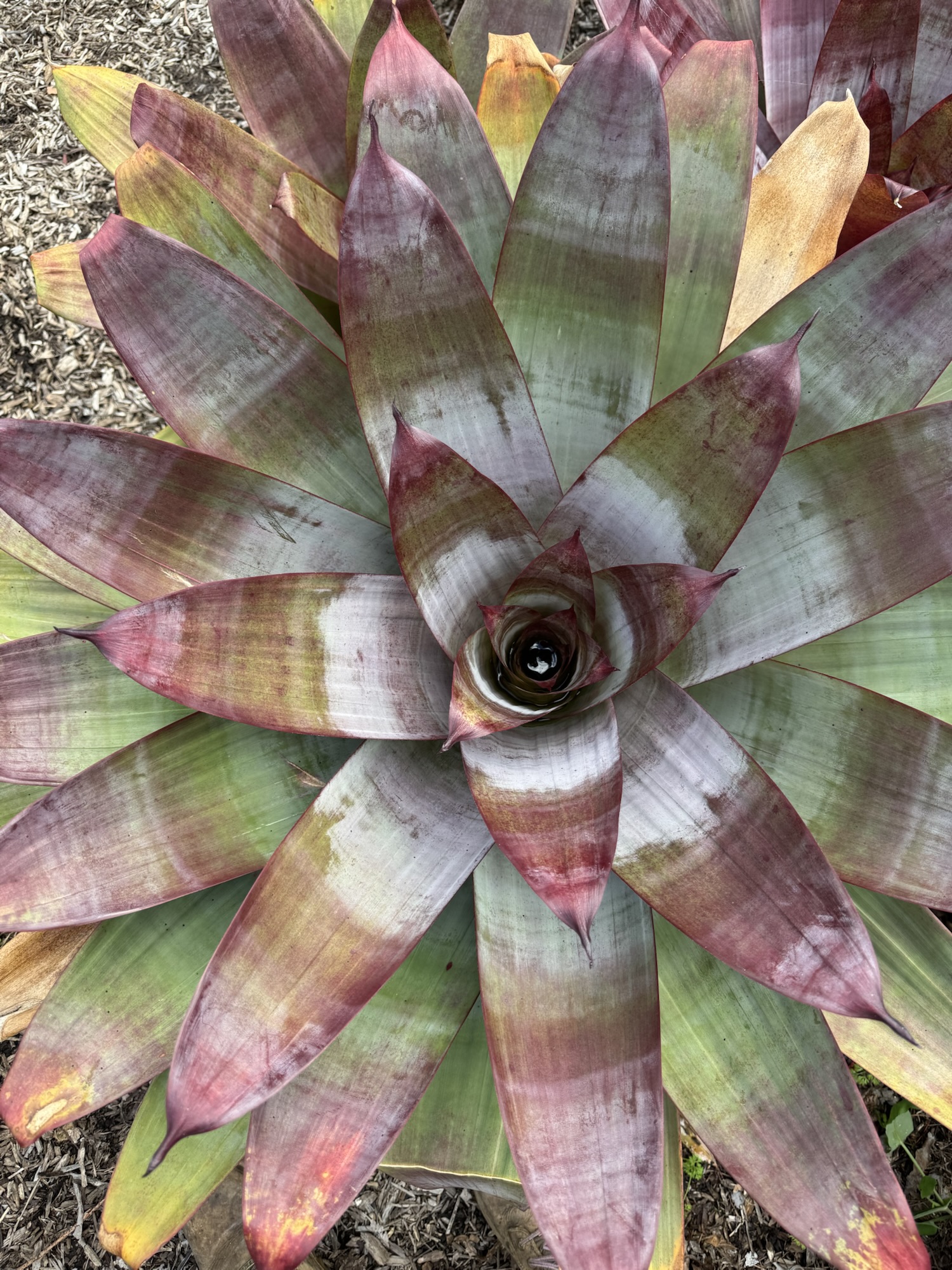
The imperial bromeliad is often used as a landscape plant here in Sydney. I can understand why-it’s big, tough and looks good too. This native of Brazil, hailing from the Sierra dos Orgaos, which is a rocky outcrop in the state of Rio de Janeiro. The meaning of the binomial name is as follows:
- Alcanterea-Dom Pedro d’Alcantara, the second emperor of Brazil
- Imperialis-very fine, showy
The climate within the imperial bromeliad’s range is seasonally dry and tropical, where light levels, as well as temperatures, are high. Conditions are extremely dry in its native habitat. This bromeliad is often known as the tank bromeliad due to the fact that, in the centre of the leaves, there is an area where water can be stored for the plant to use-this also acts as a nutrient source through decaying matter that falls into this ‘tank’. This water (that comes from rain) is always beneficial due to the fact that the imperial bromeliad is a lithophyte that has under-developed roots. These roots are also more useful as an anchor for keeping the bromeliad in place on the rocks it usually grows on.

The leaves themselves form in a rosette. They are up to 1.5m long by 15cm wide. The inflorescence is able to reach three metres tall. The flowers in the bromeliads native range are pollinated by humming birds, bats, butterflies and moths. Here in Australia, rainbow lorikeets are huge fans love the nectar found in the flowers. It can take up to twenty years to produce the inflorescence, which can have thousands individual flowers on it. The flowers are creamy yellow in colour and contain lots of nectar-bats do the pollinating. Seed pods can take six months to form-they contain airborne seeds. The plant dies after flowering. New little plants are produced form on the original plant as the flower dies back.
Full sun is where this bromeliad grows best, although it will tolerate semi-shade. It also tolerates cooler climates than its native tropical temperatures, although the warmer it is, the better. Soil should be well-drained. It does thrive in areas where there is root competition. It is also a very good plant for pots, provided thy are rather large. They also look good in a mass planting.

I do like these plants-they are tough, look good and are low maintenance. As long as they are planted in an area big enough to contain them.