When walking around my local streets yesterday, I saw some planter boxes that the local council had set up several months ago. While this is a fabulous thing that did initially make my local streets look really good, but since this initial installation, the planter boxes look a little sorry for themselves or have completely disappeared from my streets. The reasons for the messy appearance or disappearance of these planter boxes is easy to rectify, but there is a little thought needed if you want to keep the planter boxes full of good looking plants.

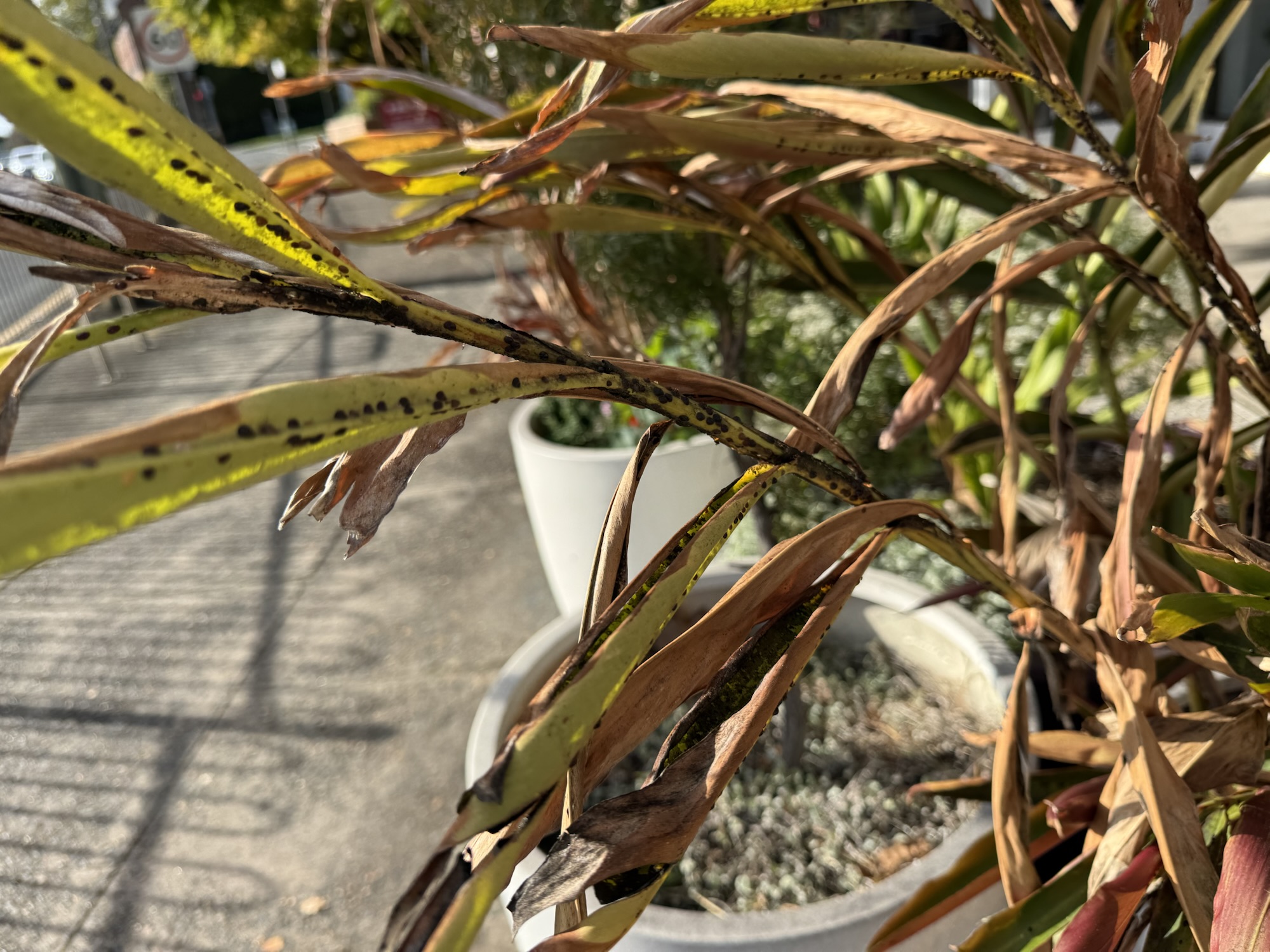
Many of the plants in the planter boxes above look rather awful, with no obvious care taken over them for a while by the looks of it. Behind the ginger, which is the worst looking of the plants, there is a westringia that’s dying and some plants that also look ok, including dichondra and nasturtium plants.


The reason why I am talking about this today is because plant choices are important in any sort of situation, whether pots like these, or in a garden. There are a couple of reasons why the ginger isn’t doing so well, the first being that this particular ginger prefers being in its native rainforest/wet schlerophyll habitat, where it is moist and in dappled shade-the full sun and extra heat from the pavement and nearby buildings don’t do it much good (even in winter). The other reason is that there is clearly little attention given to these plants-no watering (or very little), no clearing of dead plants or leaves, and no adding new one to replace them. To show how much happier the same ginger species can be in more suitable conditions, see the picture below. This is why I mentioned the lack of maintenance-the dead leaves and stems clearly haven’t been removed for a while.

Some plants do clearly feel happy here, which is why a little more thought needs to be put into these planting schemes as the extra thought means less cost in terms of garden/planter box maintenance, plant replacement and staff time (as well as the financial cost of their wages). There is also the initial cost of setting up these plants in the first place and if they get little to no attention, then it is just a waste of resources to plant them there in the first place!
This leads me on to some advice for people in their gardens, as I see similar things in gardens all the time, whether that’s a lack of time, knowledge or a dislike of gardening (and any other reason that pops up). Look at the conditions in your garden (sun levels, soil, rain you get a year, temperature and even wind) and then find plants that are happy (not tolerate-I ‘tolerate’ noise, but I’m happiest in peace and quiet, as a non-plant example) in the conditions you have. Also consider how much time you really have-if you have a full time job, a couple of kids and a house to run, you will have less time than a retired couple with grandkids popping round every now and then-choose plants that are happy to be left alone. The last thing to say is always grow plants you love, it doesn’t matter what plants are fashionable or unfashionable, if you like them then have fun with it.
I am hoping that the council gets these plants sorted out soon, and adds the others back that were across the road as they do improve the look of the streets in my area when they look good. I little thought and some maintenance (even half an hour a week would be enough) and it wouldn’t take much to be a lot better.