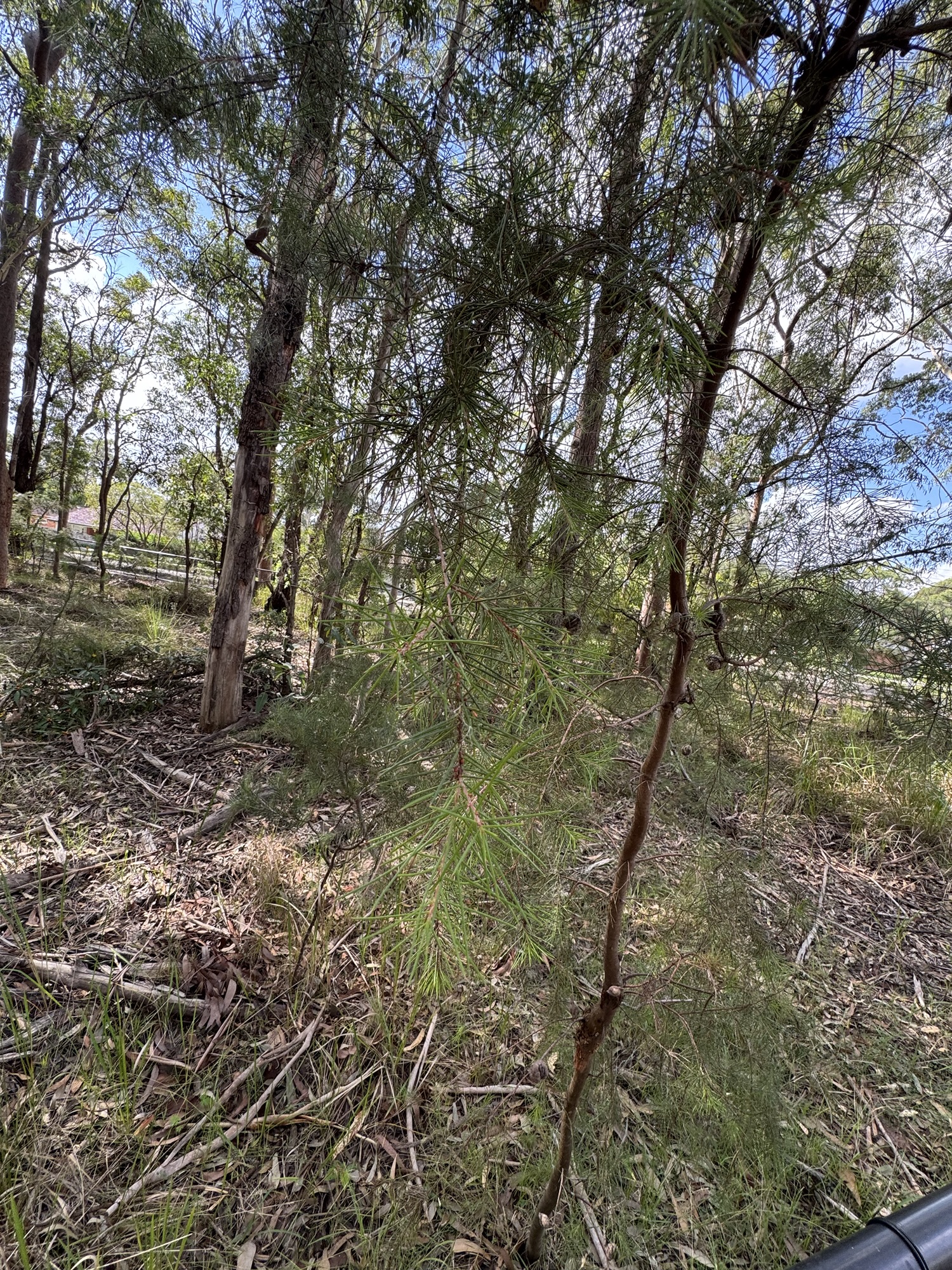
Last month, I went for a walk through Sir David Martin Reserve which was an enjoyable half-an-hour or so walking around. At the time, I struggled to find out some information on what the native plant community in this reserve is and what species that are within this plant community. As I found this a rather frustrating thing to not know, I decided to contact my local council to see of they could help me find the information that I quite like to know.

It took a few weeks, but the council have replied to my email. While I was hoping that they could tell me themselves exactly what should be there, especially as the council have responsibility for caring for the site as far as I can tell, they couldn’t, but they did send me a couple of websites to look at to find the information that I want to know. The main website that I received the link to covers the whole of New South Wales which may be useful for when I’m being nosey in the future (I’ll include the link at the bottom of the page)!
On looking at the website, I have now found out that the plant community in Sir David Martin Reserve is Sydney Coastal Shale-Sandstone forest, which is a wet schlerophyll forest.

This particular forest type is described as a tall schlerophyll open forest with a sparse shrub layer under the trees and a grassy shrub layer that are all found on sandstone crests with a ‘clay influence’. In the area, there is a transition from shale to sandstone bedrock, partly due to elevation and this area is sat on top of this transition area. Rainfall is at least 1100mm per year.

Common species found in this area include:
- Corymbia gummifera
- Angophora costata
- Eucalyptus globoidea
- Allocasuarina littoralis
- Persoonia levis
- Acacia myrtifolia
- Hakea sericea
- Commelina cyanea
- Lomandra glauca
- Microlaena stipoides
- Themeda triandra
The range of the Sydney Coastal Shale-Sandstone Forest is in various areas through Sydney, from Wollondilly in the south to the Central Coast in the north.

When I get chance, I’m going to take another walk through the reserve and see if I can identify any more of the plants present, just to increase my local plant knowledge. It’s something that I enjoy doing when I get chance, mainly because it’s quiet and I’m surrounded by nature.