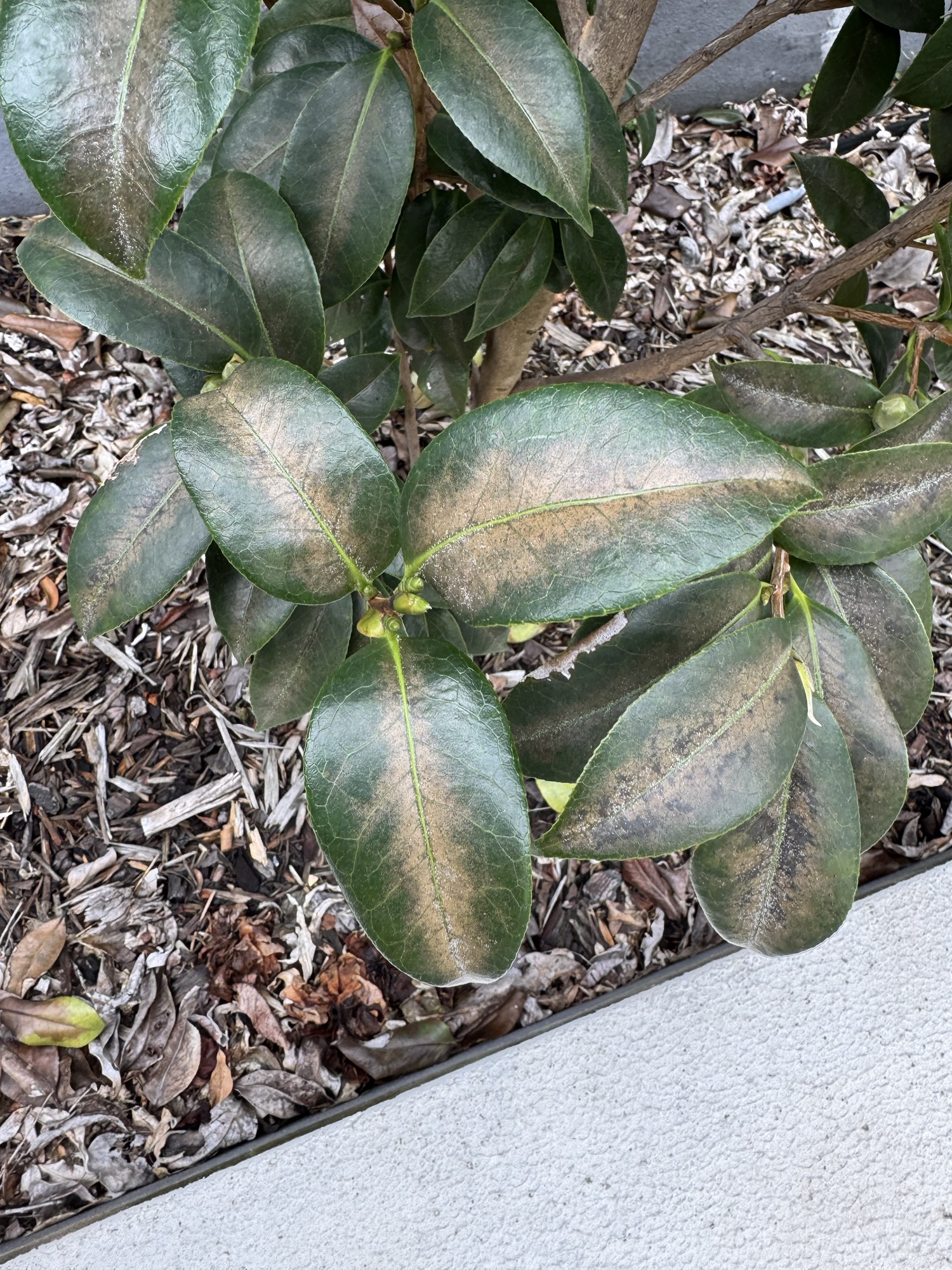
Camellia tea mite (Calacarus carinatus) is a new pest for me-I saw it for the first time earlier this week not knowing what it was other than a strange colouring on the leaves of the camellias in the garden. This is what I have learnt and will apply that when I am next in that particular garden.
This particular mite is a pest of the tea plant (Camellia sinensis), along with ornamental camellias, especially Camellia japonica which is the species in my garden at work. They can also be found on Camellia sasanqua, but this is less common. The female mites are a tiny 0.2mm in size, so actually seeing them with your naked eye isn’t going to happen. Tea mites are a purple-red in colour with stripes down their back.
The life cycle of the mite takes around two weeks to complete, which means that there can be many generations a year. Eggs get laid along leaf veins. Nymphs moult a couple of times before becoming an adult mite.
With the mites being so small, you will only see the damage they do. Infested leaves turn a bronze colour, mainly along the midrib of the leaves. Leaf curl may also happen, Leaves will also take on a dusty appearance die to the cast skins of the mites. The leaves with an infestation will not recover from the damage caused by this mite, so the infested leaves need to be carefully pruned off, and put into the general waste rather than green waste or compost. Try to prevent spreading the mite further as you do this.

There are no pesticides registered for action against this mite in Australia but, in my eyes, using pesticides isn’t a good solution long term anyway, as you aren’t dealing with the reasons that the pests have appeared anyway-if a plant is unhappy, it is always more prone to having pest and disease problems.
As with all pest and disease problems, prevention is better than a cure. Camellia tea mite is more prevalent in dry, hot conditions, which is possibly when these camellias become infected (they are in an upstairs garden that gets a lot of sun, surrounded by buildings and we have had some near forty degree Celsius day over this summer). The plants are irrigated, but I don’t currently know what the watering cycle is for these camellias-something I’ll have to find out (and adjust as required), as I’ve only been at this site for two weeks. There is a suggestion that hosing down plants can help as it increases the humidity and a foliage seaweed solution spray may help too.

The best form of prevention is to have a happy plant in the first place. Keep the water levels, nutritional requirements, light levels, soil type and drainage right and your plants will be happy and far healthier than if you don’t do anything with them. Initial plant choice is also important-you know what your garden conditions are and there is so much information available on what any particular plant needs that you can easily find what you need to make a good choice for your garden. It also makes your life less stressful.
Getting out in the garden frequently and observing your plants is also key. The more you have a look around, the more likely you are to see problems early and then deal with them, reducing the potential damage caused by the mites-it also makes the problem quicker to deal with.
That is a basi rundown of camellia tea mite, I hope it is somewhat helpful.
Crawford, D., 2015, Garden Pests, Diseases, & Good Bugs, HarperCollinsPublishers Pty Ltd, Australia
https://www.yates.com.au. Accessed 08/05/25
Photos are my own.