On my recent visit to Port Arthur in Tasmania, I was surprised to find a manicured garden amongst the ruins. Being late spring on my visit meant there were plenty of flowers to look at as I was walking through the gardens. There was also the biggest bumble bee that I have ever seen!
On feature of the general landscape that I noticed pretty quick was this massive hedge. All I can say is that I am so glad it isn’t my hedge to maintain! It is absolutely massive, but kept very tidy.

Next to one of the cottages, there was this very vibrant red valerian, Valeriana rubra. It is so colourful and healthy, despite the grey skies. I haven’t seen it in Sydney, but it was very much appreciated on my visit!

Another plant that I rarely see in Sydney is foxgloves. If I do, they are in the botanic gardens. I can’t say what cultivar this flower belongs to, but very pretty indeed.

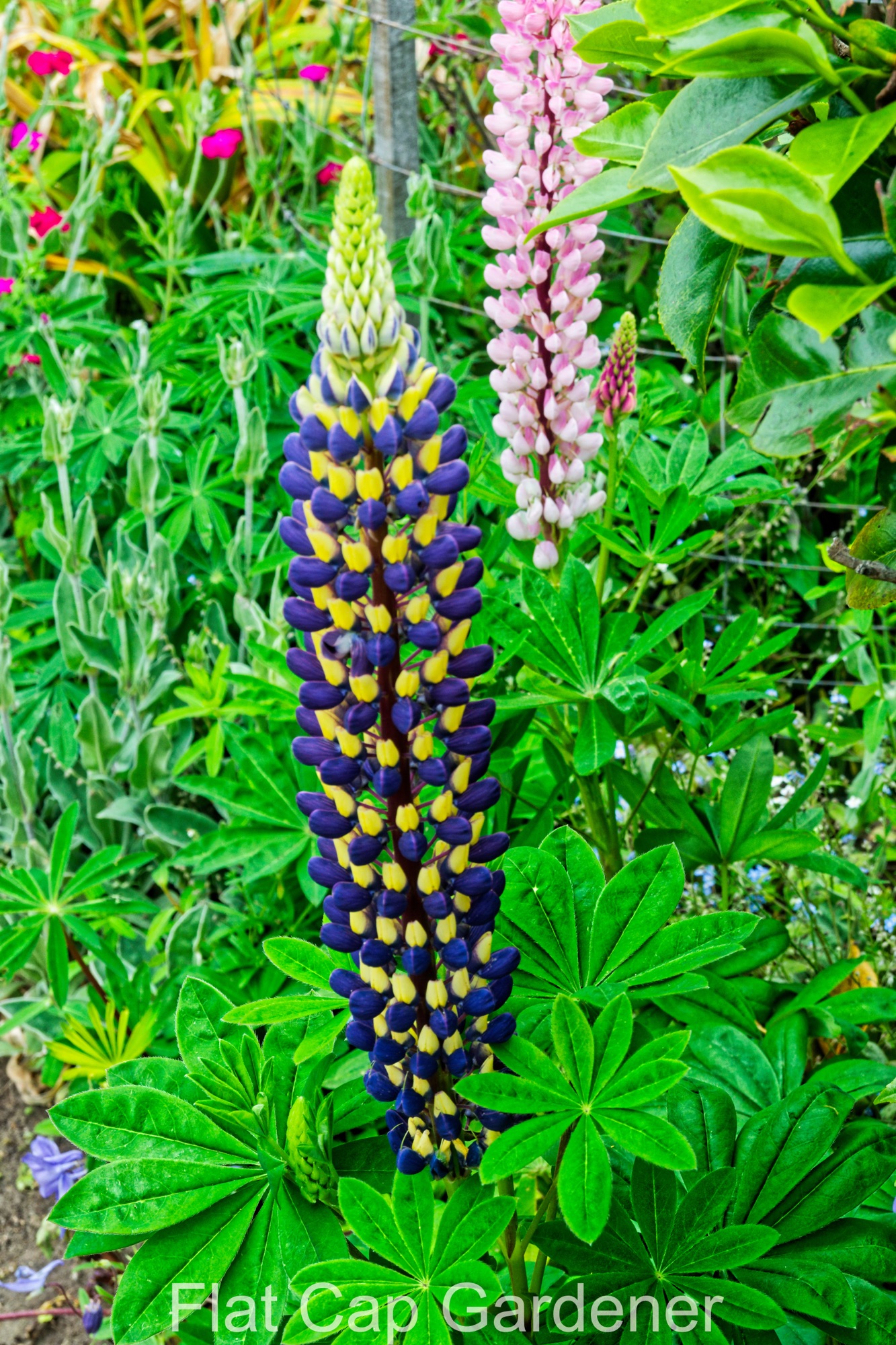
Walking around the gardens, I saw so many lupins (Lupinus polyphyllus) dotted around the place. they were mainly pink and purple varieties. It reminded me so much of England, as did the balled hedges!

I have to say that this purple and yellow one is my favourite out of all the lupins I saw. I like the colour combination.

In saying that, the pink lupins are very pretty too!

Holyhocks (Alcea rosea) were also a feature in the gardens. They look very, very pretty.

On this darker pink holyhock is this massive bumble bee. I have never seen one so big, and there were quite a few this size going about their business.

The garden was first developed by Commandant Champ between 1846 and 1847. The space the garden occupied was free from the apparent ‘disturbing presence’ of the convicts by those who were not actual inmates. They were laid out to be symmetrical, with the topiary representing order and control. The aim was to represent civilised behaviour, and the idea of womanhood at the time which was ‘ordered, peaceful and beautiful’. I don’t think that I would quite fit into that mould-I’m strong-minded and contrary for that!
Either way, this lovely garden was neglected after all the convicts were removed from the area. In 19991, the garden was reconstructed based on drawings form the nineteenth century. Plants were also cross-referenced with those growing at the Queens Domain in Hobart in the same time period. As well as English plants, there were also South American, African and Asian plants used.
While the diet of the convicts was mostly salted meat and bread, vegetables like potatoes and cabbages were grown to improve their diet. Convicts were tasked with growing these. The non-convict residents also had vegetable gardens to grow their food. There was also an orchard growing. As they couldn’t grow all their own food on-site, some did have to get shipped from Hobart on a regular basis.
As with Tasmania as a whole, Port Arthur had a bit of both my English heritage and my newer Australian life. The site is surrounded by the gum trees of Australia-add these to the very English ornamental flowers and it is the best of both worlds, despite the fact that Port Arthur exists for a strange idea of justice by todays standards!

I really enjoyed my walk, for both the history and the plants. It is well worth a visit if you find yourself down in Tasmania.