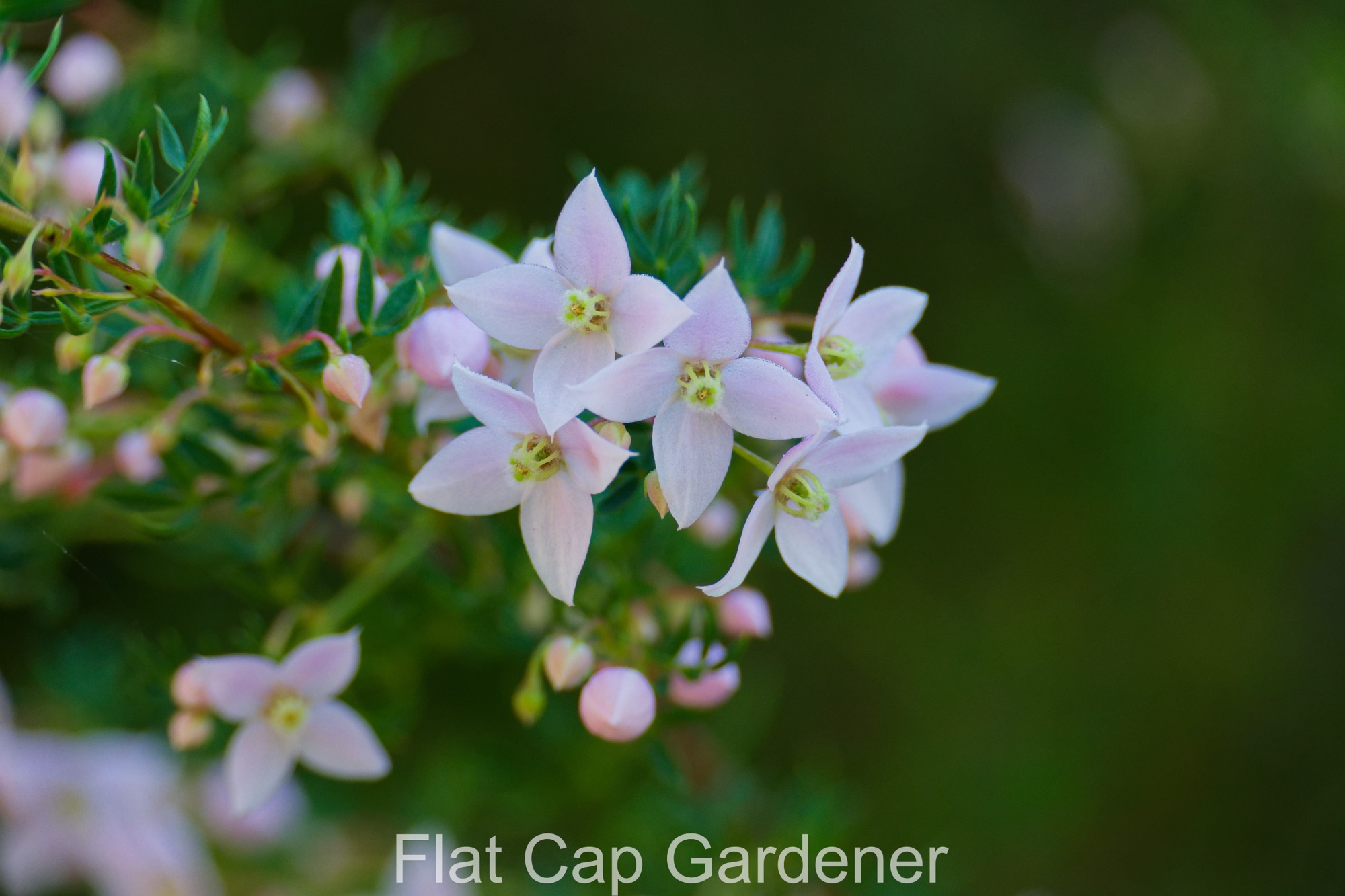
The pinnate boronia is a shrub that stands out in spring with its pink flowers. Pinnate boronia is a plant of coastal sandstone country and the lower mountain areas of the Blue Mountains within New South Wales. The habitat of this native Australian plant is dry schlerophyll forest and sandy heaths, where it can reach a height of 1.5 metres tall. In range, it exists only in New South Wales as a wild plant. The meaning of its binomial name, Boronia pinnata, is as follows:
- Boronia-used to honour Fransesco Borone, an Italian botanist working in the 18th century.
- Pinnata-from the Latin word ‘pinnatus’, meaning feathered or winged that refers to the foliage which is finely divided.

The individual leaves are pinnate with between five and nine leaflets per leaf. Each leaflet is roughly oval in shape and up to 15 x 2 millimetres in size. The whole leaf is up to fifty millimetres long. Aromatic oils are produced within the leaves, which are at their most aromatic when crushed.
The flowers appear from the leaf axils in small clusters. They are pink in colour with four petals. They look a little like pink stars. There are some white flowered forms available as well as the pink.
The pinnate boronia is a nice plant for the garden. It likes to be planted where its roots can be kept cool, like amongst rocks. Pinnate boronia prefers a position that is sheltered from the wind and strong sunlight as both of these can cause the shrub to be spoilt or broken.
The pinnate boronia is a popular garden plant. It is hardy species within temperate climates provided there is well-drained but moist soil and some part shade. Don’t let the soil dry out, keep it moist to keep the plant happy.
Apparently, propagating this plant from seed is a difficult thing to do. Luckily, using cuttings from the current seasons growth are an easier way to produce new plants.
If I had the space, I would love to have this boronia in my garden. I like the fact that it is a tough plant that looks anything but. Not all native Australian plants are massive and in your face.