While I always talk about plants in one form or another, I don’t always mention the wildlife that depends on plants for their food and homes. I love watching wildlife, whether it’s in my garden or in the bush. I’ve always found animals on all their forms a pleasure to be around. This is why I thought I would share some of my favourites with you.
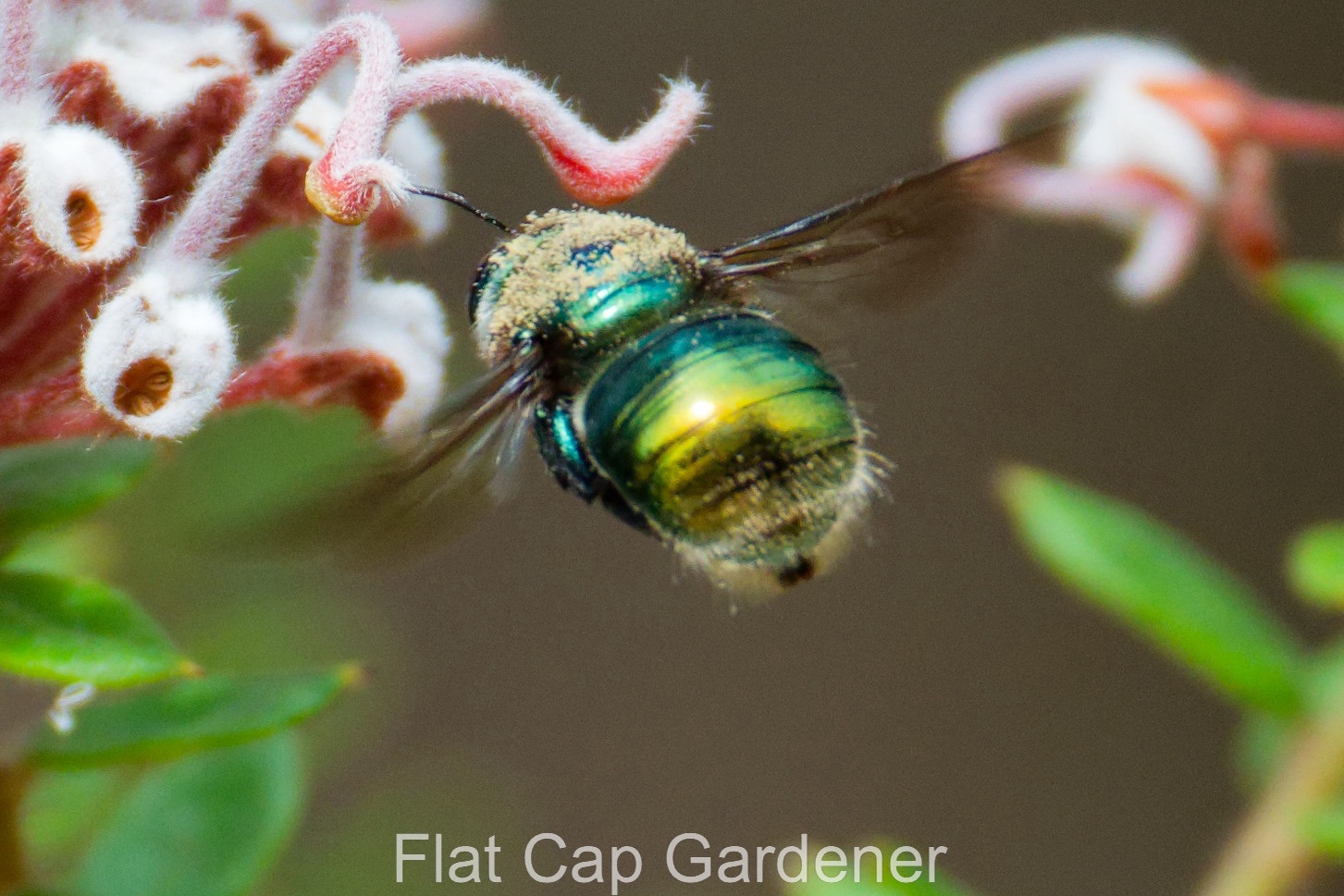
First up id a carpenter bee. Until I took some photos a couple of weeks ago, I’d never heard of such bees. They are called carpenter bees because they form nests in dead wood or other plant material. They apparently excavate their own burrows quite frequently.
The bee I saw is what I believe to be a green carpenter bee, Lestis aerata. The adults drink nectar for their food, while pollen and nectar are needed for larvae. Females form nests in the flower stalks of grass trees or dead banksia wood. The bee that I saw was busy foraging for nectar and pollen from a grey spider flower. Apparently, this particular species is rare and is very much a Sydney species.

I’m going to include the bush turkey (Alechcira lathami). These rather charming birds (in my opinion, not shared by everyone) are really common in Sydney. They are black, ground dwelling birds that can fly, but not very well. When breeding, the males develop bright red heads and necks. Their nests are large mounds of leaves, formed by the males who become rather obsessed with keeping the nest in good order. Their native habitat is any form of closed forest. For food, their eat fruit and seeds.

Thirdly is the ever-present sulphur-crested cockatoo (Cacatua galleria). The bird that sounds like I imagine a dinosaur would. Again, this is another common species of bird in Sydney, found across both urban and bushland areas. They are playful birds that are white, apart from the crest of feathers on their heads, which are bright yellow. Their natural habitat ranges from tropical swamps to eucalypt forest. Theur diet is quite varied. They eat seeds, bulbs, fruit, flowers and insects.

https://fieldofmar-e.schools.nsw.gov.au/fact-sheets/invertebrates/green-carpenter-bee-fact-sheet