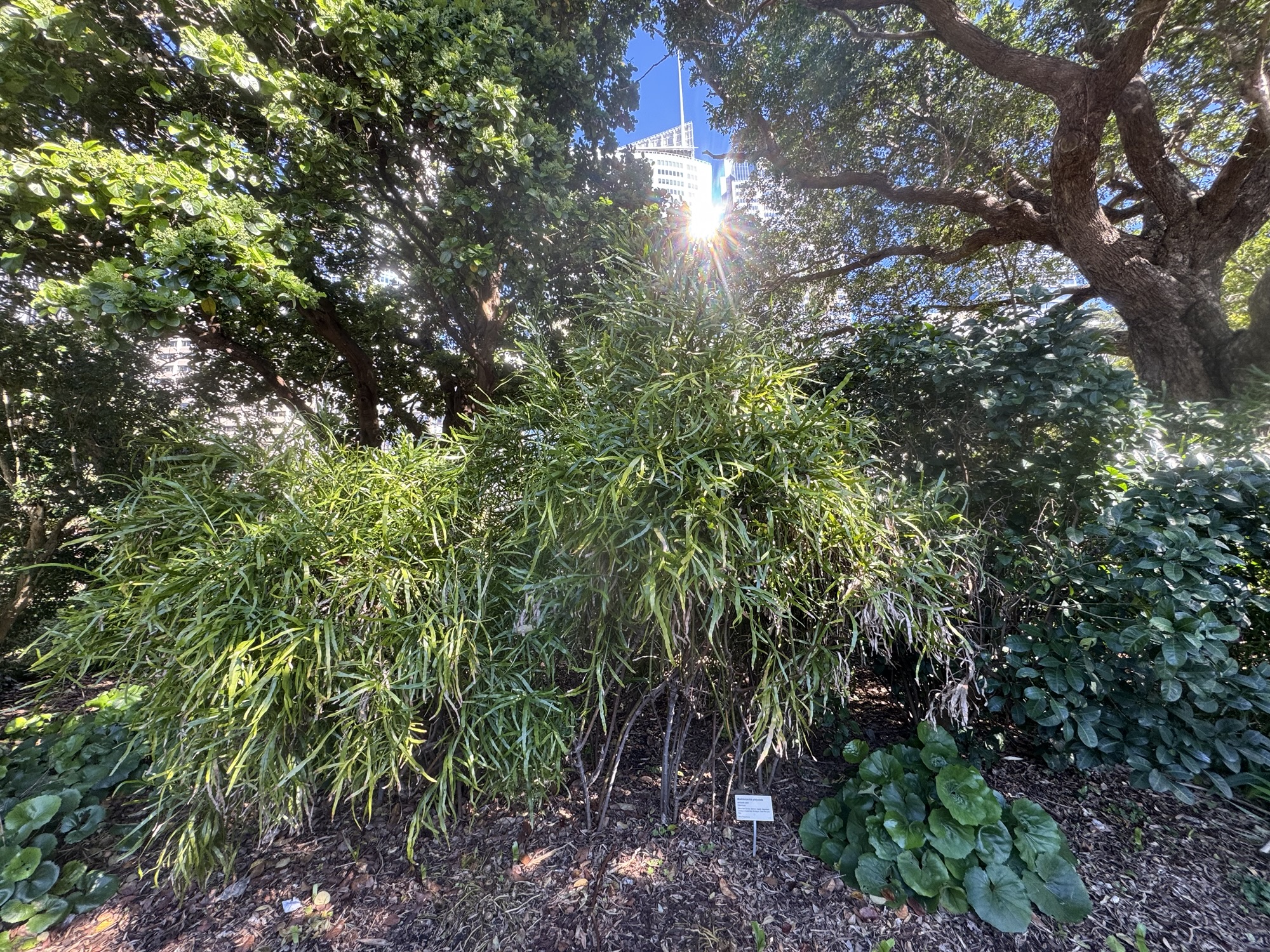
Known by many common names, including ribbon bush, tapeworm plant and centipede plant, Muehlenbeckia platyclada is rather an spreading shrub. It has stems that look ribbon-like, are jointed, and green in colour. In warm climates, , this native of the Solomon Islands is able to reach two metres across and three metres tall. The ribbon bush is a member of the Polygonaceae family. As always, here is the meaning of the binomial name:
- Muehlenbeckia-honours a physician from France called Henn Gustavo Muehlenbeck (1798-1845)
- Platyclada-comes from two Greek words ‘platos’ that means broad and ‘klados’ that means ‘a branch’, both referring to the flat stems.
The leaves of the ribbon bush appear on new growth, but because they are quite small, they are hardly noticeable. They are also short-lived. Most of the time, the ribbon bush photosynthesises through its flattened, leafless stems called phylloclades. These stems are segmented and reach up to two centimetres wide.

Flowers appear at the nodes along the stems in clusters. The green-white flowers arrive in clusters through spring. Flowers are followed by berries that turn black when mature during autumn.
Ribbon bush is happiest in full sun to part shade and moist but well-drained soil. It needs ‘moderate’ amounts of water, especially if grown in pots-if it hasn’t rained in a few days, check to see if the soil is getting dry and, if so, water it. It did evolve to grow in a tropical environment, which often have high rainfall.