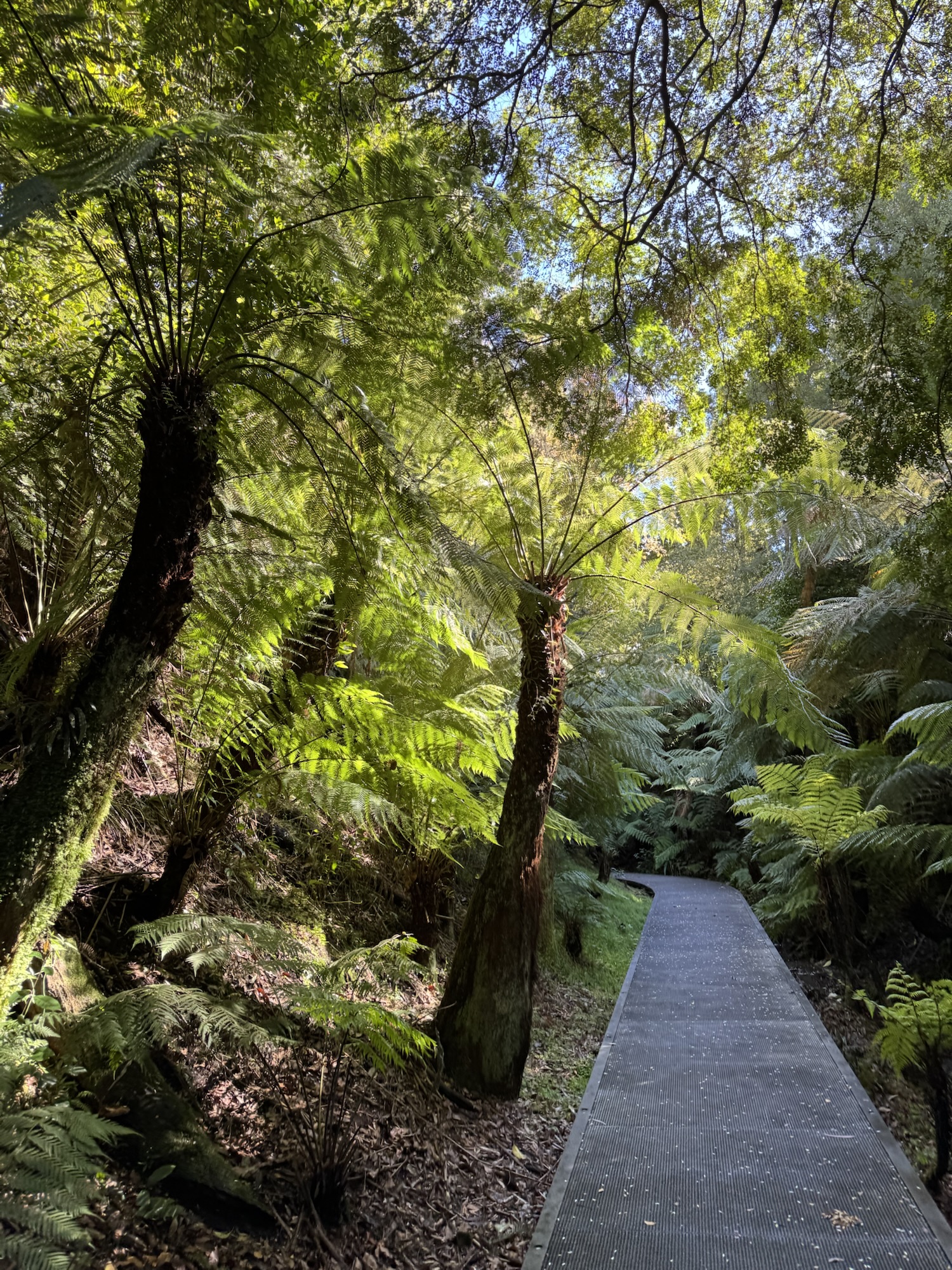
The Australian Botanic Gardens are located on the lower slopes of Black Mountain which is on the edge of Australia’s capital city Canberra. Within its 40 hectares, there are around 77, 000 plants, representing more than 4, 600 species of plants-roughly one fifth of all of Australia’s native plants. I visited in September, so early spring.

More about the gardens
The first trees were planted in the 1940’s, with the gardens being set out to display the beauty of Australian flora, while also providing a scientific resource for those who want to learn more about the plants of Australia.
The gardens are arranged into different themes, including the following:
- Taxonomic-which shows plant diversity according to their botanical relationships to each other.
- Ecological and geographic-plants here are shown together where they are from similar ecological and geographic areas.
- Horticultural-this section aims to encourage the appreciation of Australian natives for their horticultural value.
- Ethnobotanical-this area showcases the plants used by Indigenous people for their medicine, fibre and food.
- Conservation-where the rare and endangered species are grown to help protect them.
The gardens do have a stated purpose, which is to prevent plant extinctions, along with building knowledge on the flora of Australia. They aim to achieve this through the following seven functions:
- Collecting seed-seed is collected from the species that grow in the areas that the garden target, which is mainly in the Australian Capital Territory (the territory in which Canberra is located) and the region surrounding it.
- Management of the garden plant collections-the collection is curated and maintained to support the conservation and research of the collection.
- Research-lots of research is done on the seeds of native Australian seeds, allowing scientists to understand what factors affect seed germination and longevity in storage, and thus support both in-situ and ex-situ conservation.
- Supplying seed-provide seed and seedlings for conservation and research.
- Specialist training-build up a larger team of seed scientists for today and in the future.
- Research conservation-communicating the knowledge gained through research with scientific and conservation audiences to have better conservation results
- Outreach-engage with the public to promote conservation
There is also a seed bank at the gardens, which contains seeds from over four thousand different species.
My visit
As always, any time I can spend in a botanic garden is time well spent. I loved walking through a garden that was only Australian natives. There were many trees that were flowering, including many of the wattles (Acacia spp.) which were glorious in the sunshine.


Many banksias were also busy flowering.


As a place to spend some time going for a walk, the Australian National Botanic Gardens are a lovely place to be and I did have a really nice time.
I do have a fair amount to say about how the gardens could be improved. One of the main ways that the whole place could be improved would be through some informative signs talking about different areas of the garden, what they represent and the species growing in them. More of the individual plants should also have name signs next to them. While many people don’t want, or care enough, to read the presented information which is not a problem, but there are many people who would like to learn a little in this way as they pass through. As the gardens aim to carry out research and then disseminate that information, tis should include the general public too. There are many botanical gardens around the world that do great at this, including here in Sydney and in Hobart (down in Tasmania), so it can be done!
Some areas of the gardens seemed a little lacklustre, like the ‘red centre’ area. There really wasn’t much going on in that area at the time of my visit-I don’t know whether it was the time of year or what, but it seemed a little uncared for.

While I did enjoy my visit to the Australian National Botanic Gardens, but would love to see more to encourage people to engage with the wonderful plants of Australia. There is so much potential for this to happen, so I hope that it does, in time, improve.