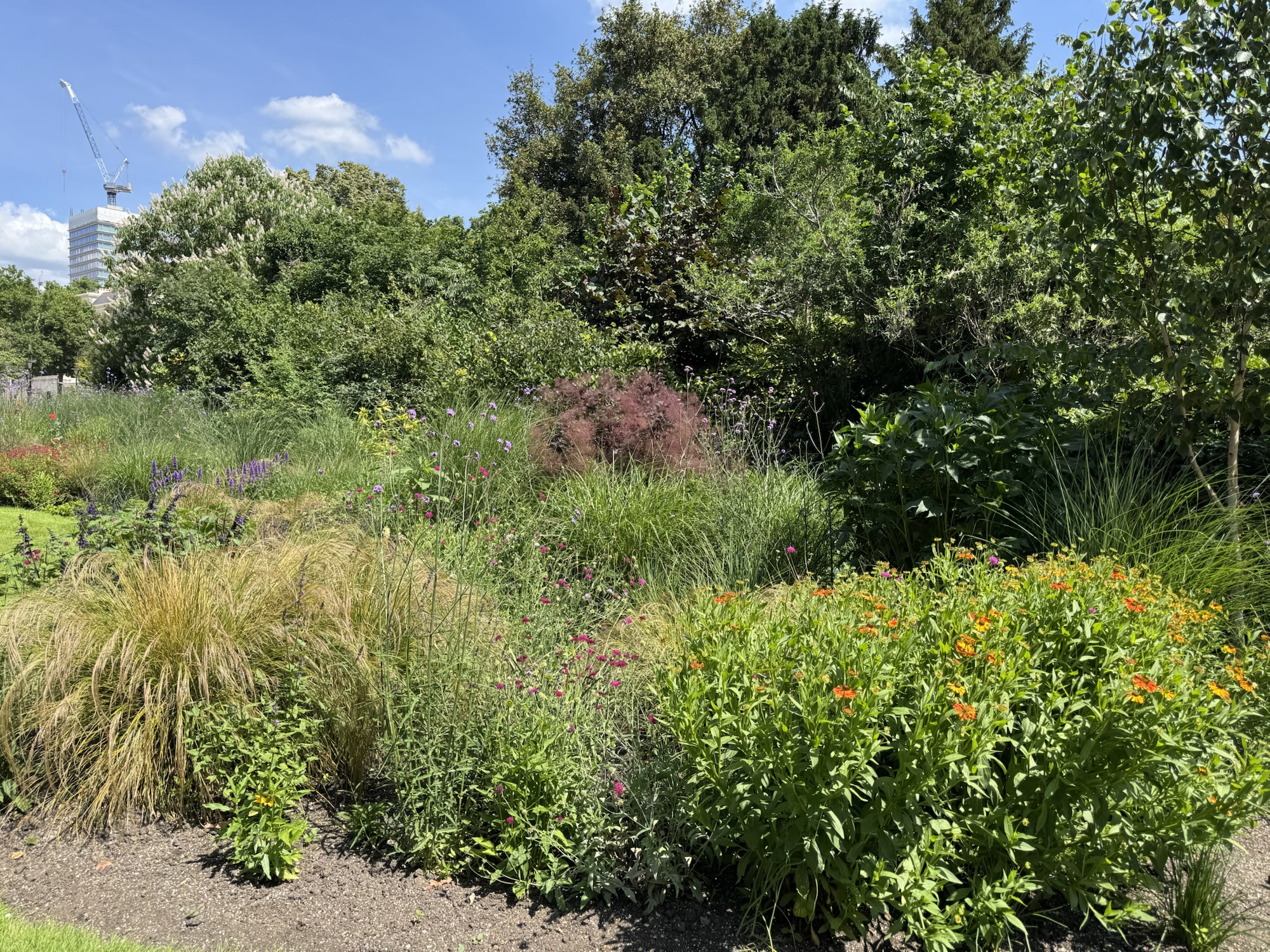
Every day at work, I see plants doing what they do best despite humans trying their hardest to stop that happening. Whether that is because the plants are generally considered weeds or it’s the native plants setting seed where they aren’t wanted. In the right context, I think this ability of plants to get on with their job should be embraced and used to do some of the work that is done by people in gardens where it often isn’t needed.

All too often, my collegues get out the chemical sprays to spray the weeds that are in garden beds where soil would be bare without them (I refuse to do this work, as it there is better ways of managing this long-term, but its ‘too much like hard work’). While a lot of these ‘weeds’ are unwanted, mainly because they are not the ‘ornamental’ sort of plant. My question is why is there not the thought to put in plants that will spread to fill that garden bed so there is less need to spray chemicals or do the weeding? If I suggest this, I get looked at like I have two heads and get told a line like it will look bad, can’t afford it (but it will actually reduce costs long-term) or any other excuse that fits.

Plants that I would use to cover garden beds include species like native violet (Viola hederacea), dianella (like Dianella cearulea, but other species too), commelina (Commelina cyanea, a nice Australian ground cover), New Zealand spinach (Tetragonia tetragonioides), or even a non-native like jasmine. With all of these plants, they spread naturally and can be kept within the garden beds boundaries easily and reduce weed growth-you may get one or two that can be pulled out as you walk past and see them without slowing you down.

This is especially useful when you have a forgotten corner in a garden, you have little time or resources for maintaining your spaces frequently, or within public spaces where finances mean that there is limited time, money and people to maintain these vital areas for people to use.
Within large areas, using trees that are native to your area and are very fruitful in their seed production, like the lemon-scented gum in its native range in Queensland, is great, especially if you are trying to improve bushland areas and their resilience to outside impacts of various kinds, like development, pollution, etc.
While I have chosen to use Australian natives as examples (mainly because I live in Sydney and natives always deal with anything the weather can throw our way better than plants from elsewhere in the world, which always makes maintenance easier, especially when the plants chosen suit the conditions of the gardens. I also like the look of them too.
I would love to be able to let nature do its thing a little more ease the workload in a positive way in terms of weed management. Gardens can look great without too much effort or human intervention, provided the intervention used is wisely done and thought through.